Autonomous driving technology has advanced dramatically over the past ten years, moving from experimental prototypes to real-world deployments. By 2026, self-driving cars are closer than ever to transforming transportation, yet issues like safety, regulation, and consumer acceptance remain central.
Whether you’re evaluating Tesla’s FSD-enabled EVs, following Waymo’s robotaxi operations, or observing Cruise’s urban testing, understanding the current landscape of autonomous driving is essential. This article explores the technology, key companies, challenges, and what to expect in the coming years.
Comprehending Self-Driving Vehicle Technology
Before comparing companies and products, it’s important to understand what makes a car autonomous and how these systems operate.
What Characterizes a Self-Driving Car
Autonomous driving systems rely on a combination of hardware and software to allow a vehicle to operate with varying levels of human supervision. Key elements include:
- Sensors: Lidar, radar, cameras, and ultrasonic sensors create a full 360-degree awareness of the surroundings.
- Artificial Intelligence & Machine Learning: Algorithms process real-time data to anticipate traffic movements and make driving decisions.
- HD Maps: High-definition maps guide the vehicle for precise navigation, lane positioning, and obstacle avoidance.
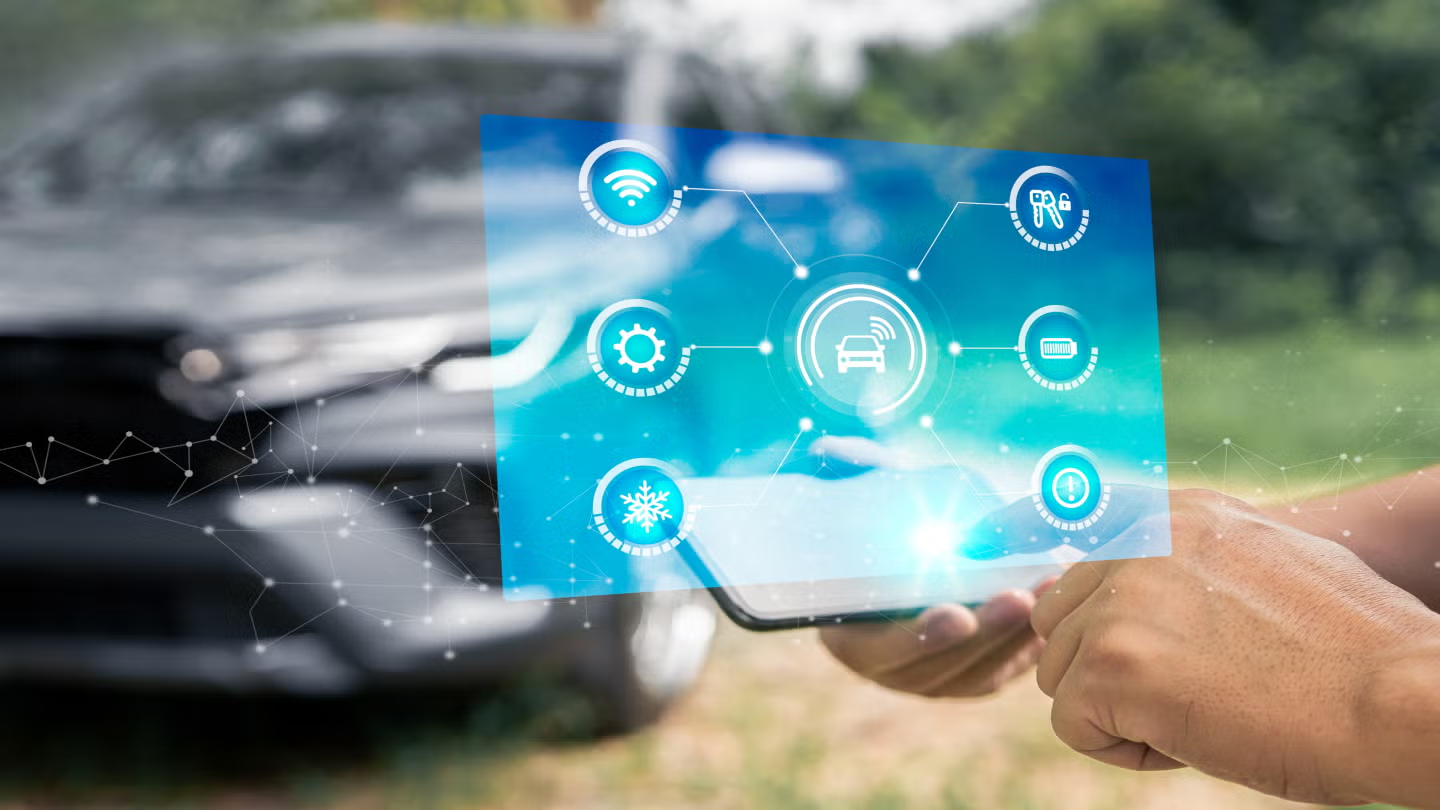
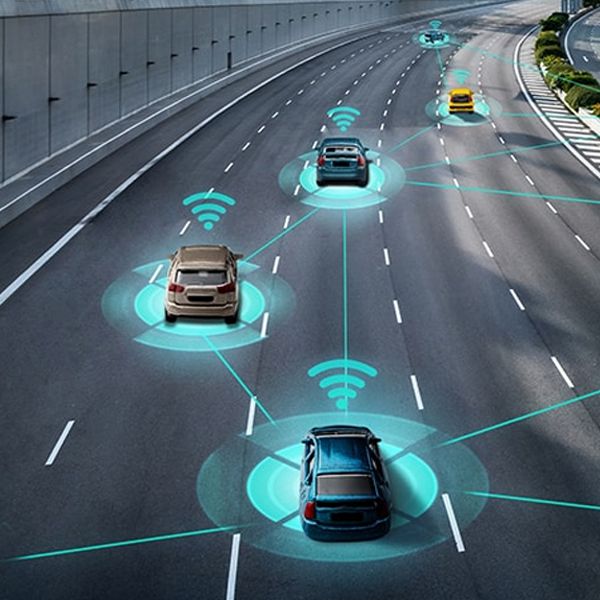
- Connectivity: V2X (vehicle-to-everything) systems enable cars to communicate with other vehicles, infrastructure, and traffic updates dynamically.
Practical Anticipations for 2026
Despite marketing claims, most vehicles today operate between Level 2 and Level 4 automation:
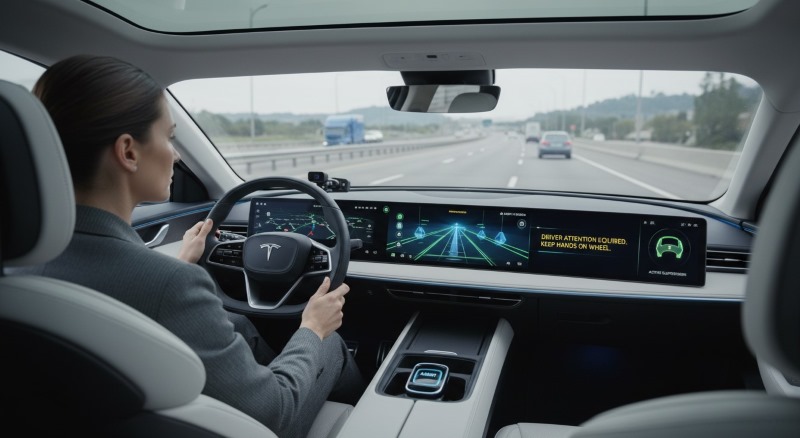
- Level 2–3: Partial automation where the driver must remain attentive (e.g., Tesla Autopilot).
- Level 4: High-level automation within limited geographies, like Waymo’s robotaxi zones.
- Level 5: Full automation in all conditions, still largely experimental and not commercially widespread.
Understanding these distinctions helps consumers evaluate claims about “self-driving” capabilities accurately.
Key Players and Their Approaches
Different manufacturers take distinct approaches to deploying autonomous driving systems, shaped by strategy, technology, and regulatory environments.
Waymo – The Safety-Focused Pioneer
Waymo, an affiliate of Alphabet Inc., is widely regarded as a leader in commercial autonomous vehicles. By mid-2026, Waymo has logged over 150 million driverless miles and transported more than 15 million passengers in selected U.S. cities. Its systems use lidar, radar, cameras, and HD maps, operating primarily in geofenced zones for safer deployment. This gives Waymo a Level 4 autonomy edge – scalable, measurable, and commercially proven.
Strengths:
- Cars designed explicitly for self-driving capability
- Operations confined to mapped geofenced areas
- Proven safety record, fewer accidents than human drivers
Tesla – Data-Centric Consumer Model
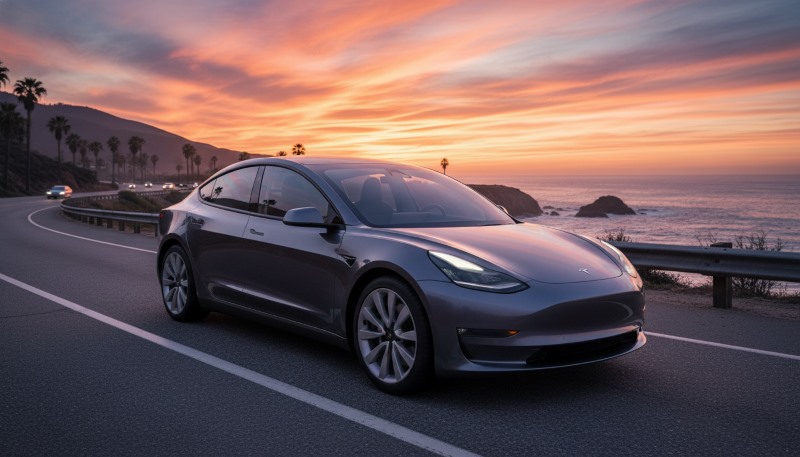
Tesla takes a different path, retrofitting consumer EVs with Autopilot and Full Self-Driving (FSD) software. Tesla relies mainly on cameras with minimal lidar, leveraging massive amounts of live data from its fleet to refine AI in real time. FSD remains Level 2–3, requiring drivers to monitor the system. Tesla has also initiated limited pilot robotaxi programs, such as in Austin, Texas.
Strengths:
- Huge data sets from consumer vehicles
- Frequent software updates and iterative AI learning
- Early-stage urban robotaxi deployment
Cruise – Urban-Focused Robotaxi
Cruise, owned by General Motors, targets autonomous ride-hailing in cities. Level 4 operations are deployed but remain limited. Regulatory delays and company restructuring have slowed growth compared to Waymo and Tesla.
Strengths:
- Urban navigation expertise
- Integration with GM’s EV lineup
- Potential for fleet expansion pending regulatory approval
Fundamental Technology Underpinning Self-Driving Systems
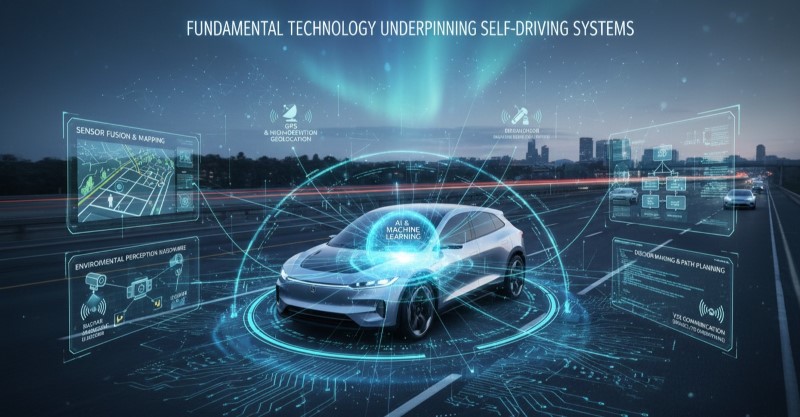
Understanding what powers autonomous driving systems is essential to evaluating how far the industry has truly come. Modern self-driving vehicles rely on a combination of advanced sensors, real-time data processing, and machine learning algorithms that allow them to interpret, predict, and react to their surroundings like – or even faster than – a human driver.
Sensor Fusion & AI Processing
Autonomous vehicles collect information through multiple sensing technologies, including lidar, radar, cameras, and ultrasonic sensors. Every one of these sensors possesses distinct advantages:
- Lidar provides high-resolution 3D mapping for object detection.
- Radar performs well in low-visibility conditions such as fog or heavy rain.
- Cameras capture visual cues like lane markings and traffic lights.
- Ultrasonic sensors handle close-range tasks like parking assistance.
The key lies in sensor fusion – integrating data from all these inputs to form a consistent, real-time environmental model. This fusion minimizes blind spots and errors that any single sensor might cause. The data is then processed by AI-driven systems, often using neural networks trained on millions of driving hours. These models learn to predict pedestrian behavior, detect other vehicles, and make split-second decisions such as braking, accelerating, or rerouting.
In essence, AI processing is the “brain” of the autonomous car, while sensor fusion acts as its sensory system. Together, they create the foundation for safe, adaptive, and increasingly autonomous driving.
Predictive Navigation & Smart Infrastructure
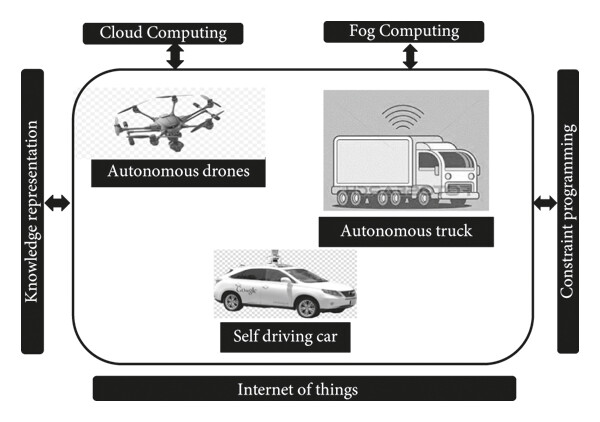
Next-generation self-driving cars are not only reactive – they’re predictive. Using machine learning, real-time traffic data, and cloud-based updates, autonomous systems can anticipate road conditions, recognize construction zones, and even calculate alternative routes before a slowdown occurs.
Additionally, integration with smart city infrastructure is becoming critical. Connected traffic signals, roadside units, and vehicle-to-everything (V2X) communication allow cars to “talk” to their environment – sharing information about traffic flow, accidents, and road hazards. This cooperative ecosystem reduces congestion, enhances safety, and enables smoother rides in dense urban areas.
As cities adopt 5G and IoT connectivity, autonomous vehicles will evolve from individual smart machines into nodes within a larger, intelligent mobility network. That shift marks a fundamental leap from automated driving to truly autonomous transportation.
Protection, Compliance, and User Issues
While autonomous driving systems are rapidly evolving, safety and regulation remain the defining factors shaping their public acceptance and commercial rollout. Even as algorithms improve and vehicles log millions of self-driving miles, questions about accountability, reliability, and public trust continue to dominate the conversation.
Reducing Accidents
Waymo reports over 90% fewer crashes in controlled areas, illustrating the potential for autonomous systems to enhance road safety. Tesla and Cruise continue to refine algorithms to achieve similar performance levels.
Juridical and Coverage Factors
Insurance for self-driving cars is complex due to liability questions. Drivers need to understand differences in coverage for semi-autonomous versus fully autonomous vehicles. Governments are gradually updating regulations to clarify responsibilities in case of accidents.
Adoption Trends and Market Insights
Autonomous technology is influencing both consumer cars and commercial ride-hailing services.
Consumer Vehicles vs. Robotaxis
- Consumer EVs: Tesla leads in semi-autonomous systems, appealing to tech-savvy buyers willing to supervise.
- Robotaxis: Waymo’s fully autonomous fleets operate without drivers, primarily in urban zones.
Subscription & Ride-Hailing Models
Companies are exploring subscription-based autonomous services, which could reduce the need for private car ownership in dense cities. These services offer environmentally friendly, cost-effective alternatives.
Obstacles in Expanding Self-Driving Deployment
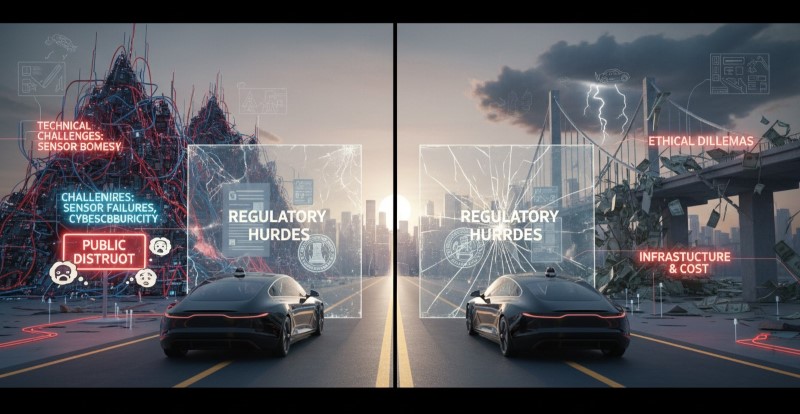
Autonomous driving has made huge strides, but scaling it for everyday use is still a major challenge. The gap between controlled pilot programs and real-world, all-weather reliability remains wide.
To understand why, let’s look at the three biggest challenges holding back large-scale adoption.
Technical Hurdles
AI systems must manage complex scenarios such as extreme weather, roadworks, and unpredictable pedestrians. Ensuring reliability under all conditions is a significant barrier.
Infrastructure Requirements
Autonomous cars function best on well-mapped roads with smart traffic systems. Urban planning, proper lane markings, and connected infrastructure are critical for adoption.
Public Awareness and Trust
Consumer confidence grows with transparent reporting of incidents and clear communication about system limitations. Education about autonomous systems is essential for wider acceptance.
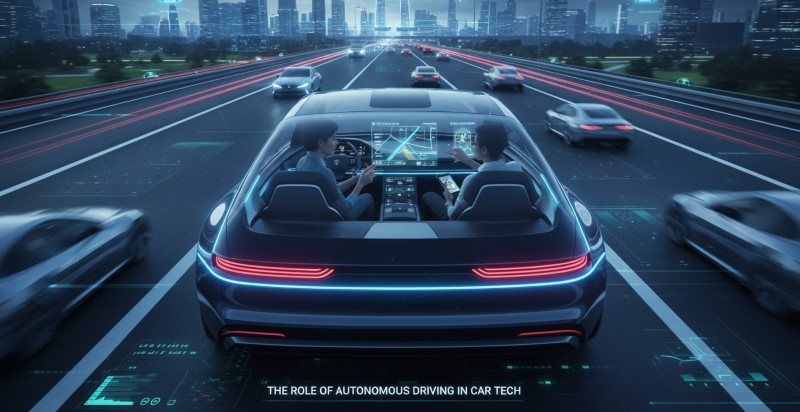
The Role of Autonomous Driving in Car Tech
Autonomous driving is now a central focus in automotive technology, alongside electric vehicles and connected car systems.
Merging with Electric and Networked Cars
Most autonomous platforms integrate seamlessly with electric drivetrains, enabling energy-efficient, intelligent driving. Connectivity also facilitates interaction with smart city systems and other vehicles.
Enhanced Protection and Convenience Elements
Autonomous systems support collision avoidance, adaptive cruise control, lane-keeping, and infotainment enhancements. These features appeal to tech-conscious consumers looking for comfort and convenience.
For deeper insights, visit the Car Tech section on TwoSpotlight.com, your hub for the latest automotive technology news and expert analysis.
Projecting Forward to 2027 and Further
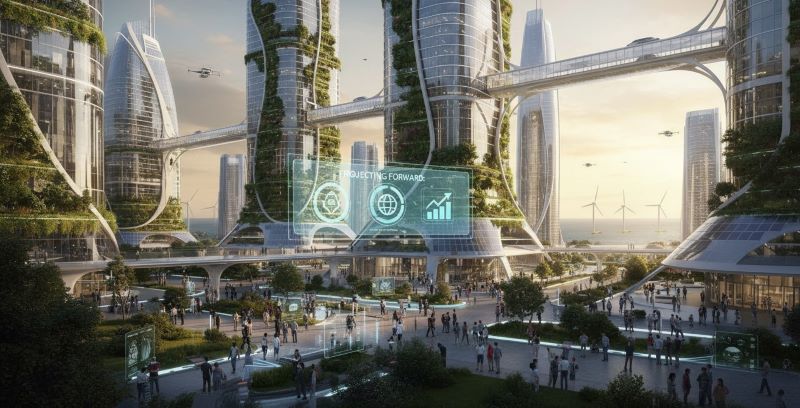
As autonomous driving continues to evolve, the road ahead looks both promising and complex. 2026 has proven that self-driving technology is no longer theoretical – it’s operational, visible on public roads, and influencing how automakers design vehicles. Yet, we’re still only at the beginning of large-scale adoption.
Over the next few years, advances in AI learning, regulatory adaptation, and public trust will determine which companies lead the next phase of mobility. Here’s what experts and industry data suggest we can expect by 2027:
- Broader deployment of Level 4 autonomy in major urban areas.
- Expansion of robotaxi fleets with stronger safety and reliability metrics.
- AI systems capable of navigating more complex, real-world traffic scenarios.
- Gradual regulatory acceptance of semi-urban autonomous operations.
- Incremental Full Self-Driving (FSD) upgrades in consumer EVs, while commercial fleets push toward fully driverless service.
Final Verdict – Leaders and Emerging Players
| Company | Strengths | Weaknesses | Current Autonomy Level |
| Waymo | Extensive commercial mileage, geofenced operations, safety record | Limited geographic coverage | Level 4 |
| Tesla | Massive data collection, iterative AI, consumer penetration | Requires human supervision, regulatory scrutiny | Level 2–3 |
| Cruise | Urban EV integration, pilot programs | Restricted deployment, legislative barriers | Level 4 (limited) |
Waymo currently leads in commercial deployment and safety, Tesla excels in fleet-based AI refinement, and Cruise shows promise in urban robotaxi services. The competition is ongoing, and 2027 will be pivotal in shaping market leadership.
How Readers Can Stay Updated
Tech enthusiasts, investors, and prospective autonomous vehicle buyers can follow key developments by:
- Tracking real-world deployment metrics, like miles driven and safety data
- Monitoring NHTSA and state-level regulatory updates
- Exploring TwoSpotlight.com’s Car Tech section for expert insights on autonomous vehicles, connected EVs, and other automotive innovations
Staying informed ensures that readers understand autonomous technology, trust its capabilities, and make confident decisions when adopting self-driving cars.