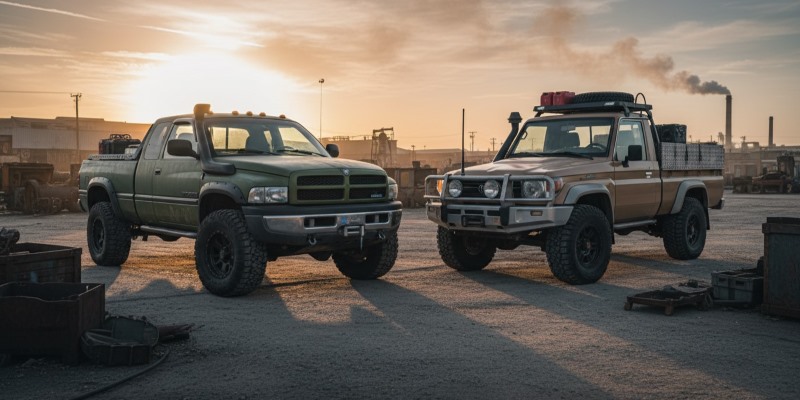
Edison Motors diesel-electric pickup prototypes are redefining classic truck electrification. After nearly a year of development, the Canadian company has unveiled a second-generation Ram and a Toyota Land Cruiser 79 Series equipped with a Cummins-powered series-hybrid system. These builds preview Edison Motors’ upcoming diesel-electric conversion kit, designed to transform classic trucks from the past six decades into range-extended hybrid pickups.
Edison Motors: Bridging the Gap Between Classic Trucks and Modern Electrification
Edison Motors has established itself as a forward-thinking innovator in the electric vehicle space, particularly in work trucks and heavy-duty machinery. Founder and president Chace Barber has a reputation for practical, realistic approaches to electrification, prioritizing durability and usability over hype. The company’s partnership with Rich Bosch of Deboss Garage, now Edison’s Vice President of Work Truck Fabrication, has been pivotal in translating that vision into functional prototypes.
“These builds show that you don’t need to compromise a truck’s utility for electrification,” Barber said in a recent interview. “We’re focused on creating real-world solutions that can be adapted to existing vehicles, making hybrid technology accessible to more owners.”
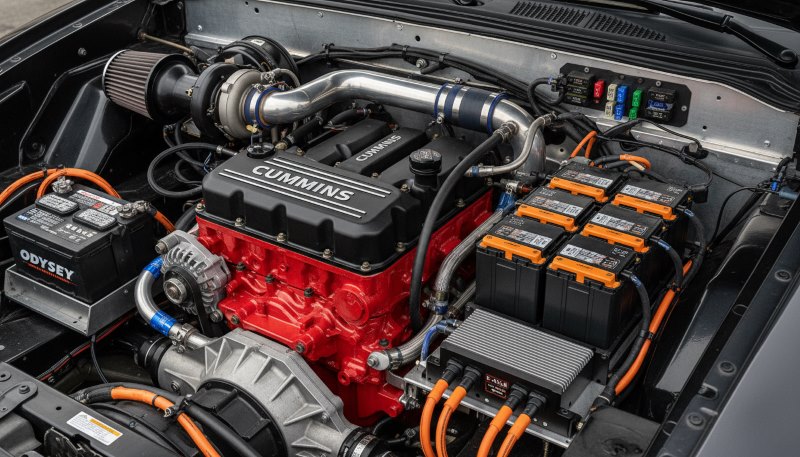
The new pickup prototypes continue Edison’s commitment to series-hybrid technology, a concept with a century-long history in locomotives and heavy equipment. By combining a compact diesel engine with electric motors and battery storage, these pickups can deliver both instant torque and range-extension capabilities, ensuring a practical and versatile driving experience.
Understanding the Operation of a Diesel–Electric Powertrain
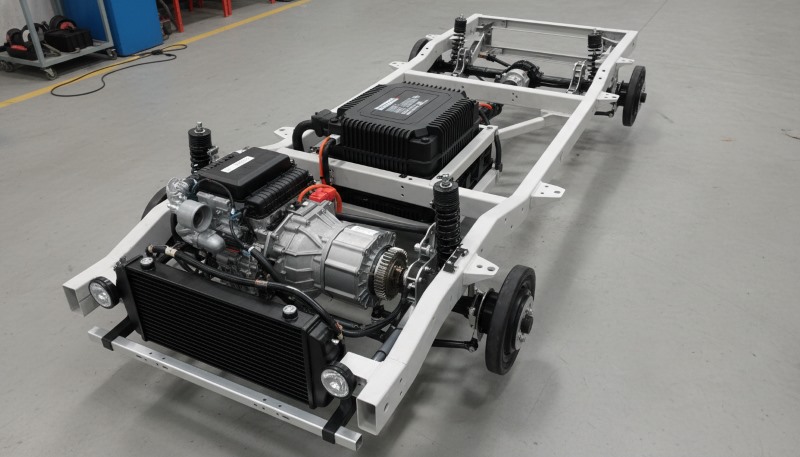
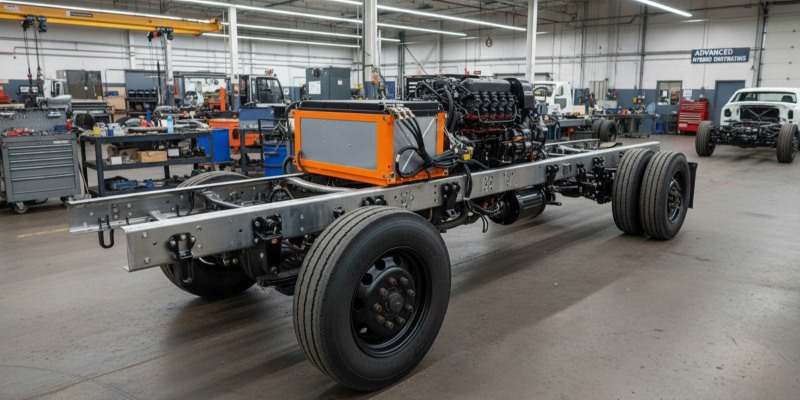
Both the Ram and Land Cruiser prototypes are powered by a 2.8-liter Cummins diesel crate engine, a small yet robust four-cylinder designed to run efficiently as a generator. Unlike conventional hybrids, the diesel engine does not directly drive the wheels. Instead, it spins a generator that feeds electricity into a frame-mounted battery, which in turn powers e-axles delivering torque directly to the wheels. This setup eliminates the need for a traditional transfer case, resulting in cleaner drivetrain packaging and smoother off-road operation.
This setup offers a wide range of advantages:
- Silent electric operation: When running purely on battery power, these pickups are whisper-quiet, providing a completely different experience compared to conventional diesel trucks.
- Extended range: The onboard diesel engine generates electricity on demand, alleviating range anxiety commonly associated with battery-electric vehicles.
- Instant torque: Electric motors provide immediate wheel torque, enhancing acceleration and off-road capability.
According to Edison Motors, this configuration ensures that trucks retain their traditional ruggedness while gaining modern efficiency and performance enhancements, making them suitable for both daily driving and heavy-duty work.
Engineering and Layout Difficulties
Designing a retrofit diesel-electric kit for trucks spanning six decades is no small feat. Edison and Deboss Garage have had to account for vastly different chassis layouts, bed configurations, and suspension setups while keeping the kits universal and minimally invasive.
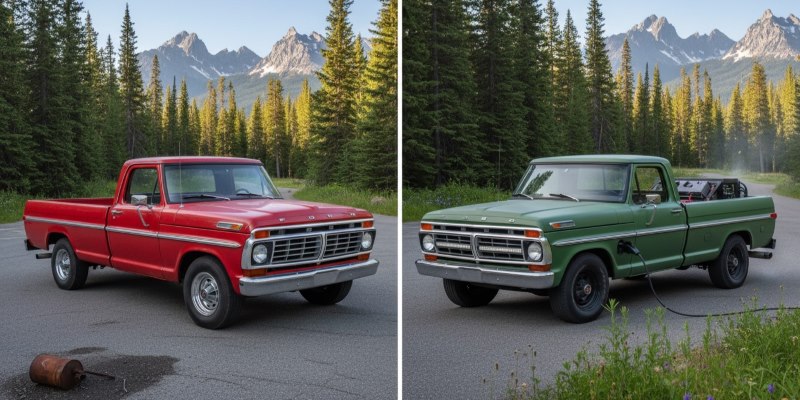
For instance, the Land Cruiser prototype required a bed-mounted EV cooling system, which Edison is actively redesigning to fit under the truck bed, maximizing cargo space and usability. The second-gen Ram, by contrast, manages to house all hybrid components completely out of sight, making it nearly indistinguishable from a stock pickup at first glance.
These packaging innovations are critical because they ensure that the converted pickups maintain full payload capacity and bed usability, essential factors for owners who rely on trucks for work or recreation.
Why On-Road and Practical Testing Matters
Unlike many startups that focus on concept hype, Edison Motors has taken a hands-on, empirical approach to development. The prototypes have undergone extensive testing, from driveability assessments to battery and e-axle durability trials, ensuring that the kits can survive both daily commuting and extreme off-road conditions.
Barber and his team have been candid about the iterative nature of their process. Several ideas were abandoned when they failed to meet Edison’s rigorous standards for performance, safety, and longevity. This transparency, according to industry analysts, sets Edison apart from other EV startups, which often rely heavily on marketing and preorders to fund development.
“Being honest about what works and what doesn’t is rare in this space,” said Barber. “It’s important that our customers trust these systems not just to work once, but to work consistently over years of use.”
Possible Commercial Segments and Use Cases
Edison Motors’ range-extended diesel-electric pickup kits have broad implications for the automotive market. They offer a pathway for:
- Classic truck owners: Enthusiasts who want to modernize their vintage vehicles without sacrificing originality.
- Work truck operators: Fleets that require extended range, off-road capability, and low operational noise in urban or remote environments.
- Overlanders and off-road adventurers: Drivers seeking electric torque and diesel reliability in long-distance, off-grid scenarios.
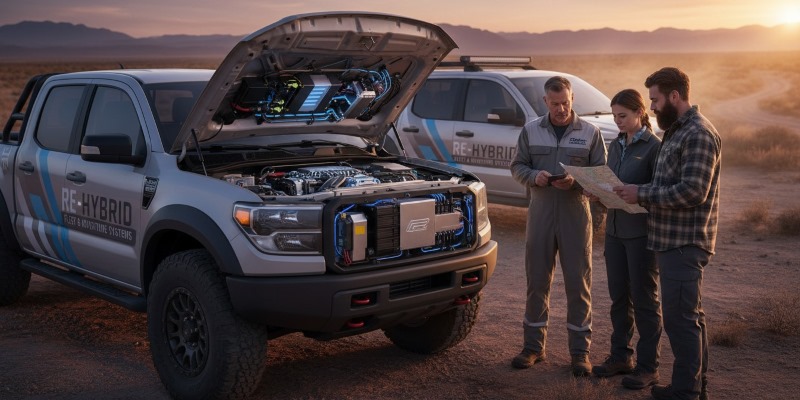
Additionally, Edison is exploring the sale of rolling chassis with the hybrid drivetrain preinstalled, allowing customers to simply place their desired pickup body on top. This approach could streamline conversions and make the technology accessible to a wider audience, from DIY hobbyists to commercial operators.
Sustainability and Futureproofing
One of Edison’s core missions is sustainability. By converting existing vehicles to hybrid-electric operation, the company reduces the environmental impact of manufacturing new vehicles. Classic trucks that might otherwise remain gas-powered and inefficient can now achieve lower emissions and improved fuel economy, thanks to the series-hybrid system.
The combination of a small-displacement diesel engine and battery-electric propulsion offers significant advantages:
- Reduced fuel consumption compared to conventional pickups.
- Lower greenhouse gas emissions, particularly on city streets where electric operation dominates.
- Preservation of existing vehicles, reducing automotive waste and supporting the circular economy.
Looking Ahead: Production and Kit Availability
Currently, Edison’s pickup prototypes remain in the development and validation phase. While specific pricing and availability details are not yet finalized, the company has indicated that the conversion kits will be offered in the near future. This will allow a wide range of classic and modern pickups to benefit from diesel-electric propulsion, expanding the market for sustainable performance upgrades.
Industry observers note that Edison’s approach is particularly timely, as demand grows for electrified trucks with practical range and utility. Competitors in the electric pickup space, from Ford and Rivian to Tesla, have focused primarily on new vehicles, leaving a niche for retrofits and hybrid conversions. Edison Motors appears poised to fill that gap with technically advanced, real-world solutions.
Edison Motors’ work with diesel-electric pickups represents a significant evolution in vehicle electrification. By combining classic pickup platforms with series-hybrid powertrains, the company has created machines that are both functional and forward-looking. The prototypes—a second-gen Ram and a 79-Series Toyota Land Cruiser—demonstrate that it’s possible to modernize existing vehicles without sacrificing their character or utility.
With plans to launch conversion kits and potentially rolling chassis, Edison is making electrification accessible to a wide audience, including classic truck enthusiasts, fleet operators, and off-road adventurers.
In an era where sustainability and performance are often at odds, Edison Motors’ diesel-electric pickups provide a compelling bridge between the past and the future, delivering the torque, range, and reliability that both drivers and the planet can appreciate.
As development continues and kits approach production, the industry will be watching closely to see if Edison can translate its prototypes into practical, scalable solutions for the growing market of hybrid and electrified trucks.
Leave a Reply