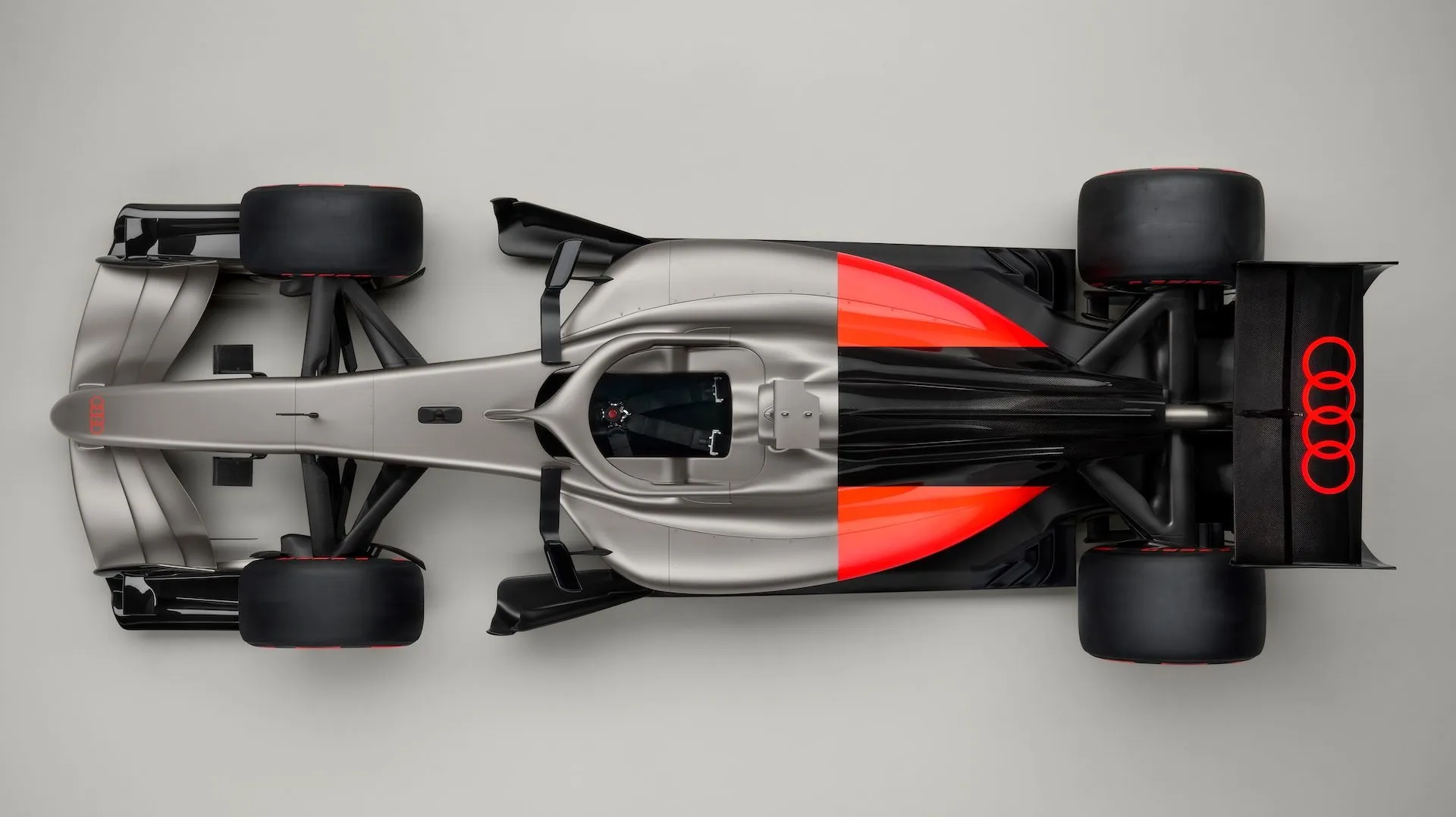
Designing a Formula 1 car is difficult. Designing a Formula 1 car without any previous F1 design language is something else entirely. Yet that’s exactly the challenge Audi faced as it prepared the R26, its first ever F1 machine, and a car meant to symbolize not just a debut season but a new era.
While Ferrari has red, Mercedes has silver, and McLaren has Papaya Orange rooted in decades of tradition, Audi had no pre existing F1 identity to recycle. So the brand had to answer a fundamental question:
How do you create a Formula 1 livery that honors Audi’s legendary motorsport past while still looking like something entirely new?
TwoSpotlight sat down with Marco dos Santos, the lead designer responsible for shaping the R26’s aesthetic, to understand how Audi blended history, innovation, and design philosophy into a livery that demands attention on the grid.
A Clean Slate But a Heavy Legacy
Audi may be “new” to Formula 1, but the brand is anything but inexperienced in racing.
From Group B Quattro monsters to Le Mans dominating prototypes to Dakar EV challengers, Audi has a racing catalog filled with icons. Still, there has never been a Formula 1 car carrying the four rings and that brought both creative room and pressure.
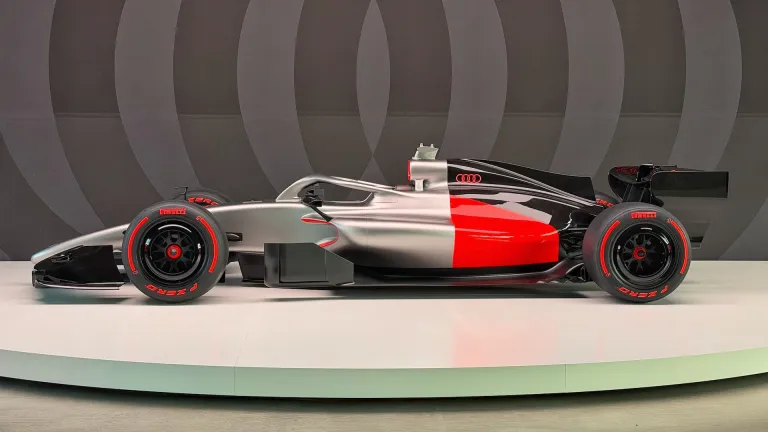
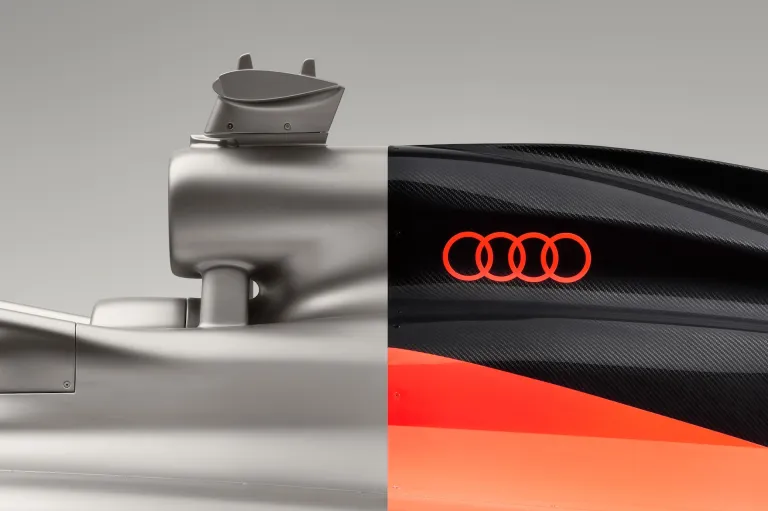
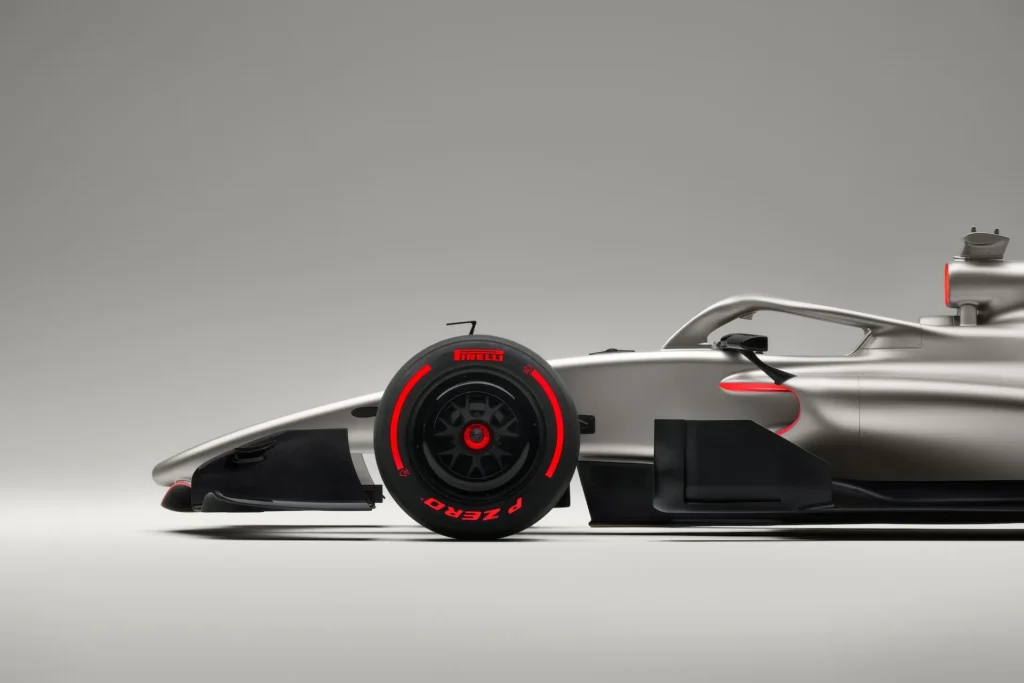
The R26, unveiled this week, proves that a simple palette of Titanium grey, Lava Red, and exposed carbon fiber can create a striking visual identity. The “black” isn’t paint at all it’s a dark carbon weave that integrates visually with the car’s aerodynamics.
Dos Santos explained to TwoSpotlight that the first step was looking inward:
“We took a long, honest look at our racing history what made us successful, what defined us and then figured out how to evolve that,” he said.
A retro silver livery, like a modernized Auto Union Type C, would’ve been the obvious choice. But that wasn’t the mission. Audi wanted something progressive, not nostalgic.
Balancing Heritage and a Forward Looking Identity
Audi’s design team wanted the R26 to feel like part of the brand’s lineage without looking like a museum piece. That required pushing boundaries within the rigid constraints of an F1 chassis.
“The racecar is a design object first,” dos Santos explained.
“Every line has a purpose. That’s why we color blocked the body the way we did-letting the form dictate where Titanium meets exposed carbon fiber and where the Lava Red slices through.”
The Titanium shade, which debuted on the Audi Concept C, covers much of the nose, driver cell, and sidepod surfaces. From there, Lava Red defines the car’s identity and boosts visibility on track and on TV something livery designers now treat as essential.
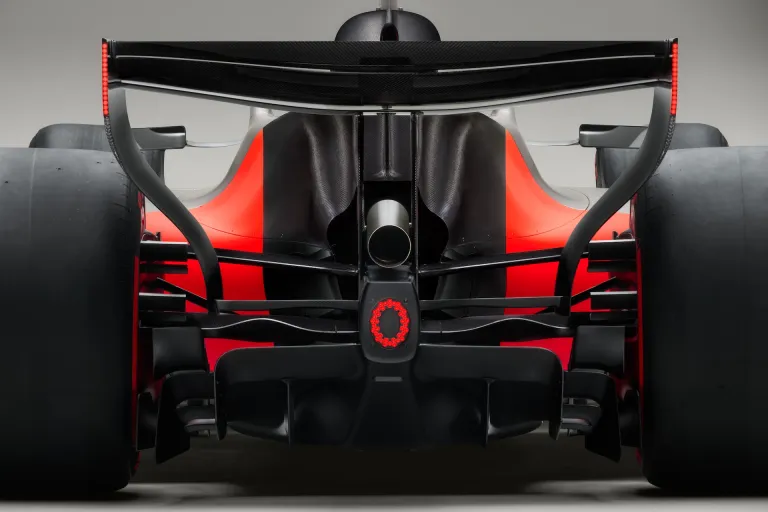
The exposed carbon fiber on the engine cover and rear wing brings a motorsport feel that connects to Audi’s modern performance DNA.
Look closely and you’ll see subtle references to:
- 2000s Le Mans prototypes (R8, R10, R18)
- WRC Quattro heritage
- The S1 Hoonitron
- The Q8 e-tron Dakar racer
But the R26 never feels derivative. It’s a synthesis not a tribute act.
Design Constraints and Creative Freedom
Despite working within one of motorsport’s most restrictive canvases, dos Santos said Audi still found room to innovate.
“F1 has extremely specific architecture. But Audi has so many cool elements from the past to evolve. We wanted something that screams engineering performance while staying true to Audi’s spirit.”
That meant matching certain carbon fiber sections precisely to aerodynamic surfaces and using color only where it advances the car’s dynamic lines. It’s minimal but intentionally so.
The Emotional Weight of Designing an F1 Car
For dos Santos, the R26 isn’t just a product it’s a career milestone.
“It’s unreal to design an F1 car. The biggest honor is working with people who are obsessively dialed into every aspect of the car: materials, finishes, surfaces… all of it.”
From 2D concepts to 3D surfaces, collaboration with aerodynamicists and engineers shaped the livery just as much as design intent. The livery had to match airflow, contours, and performance zones.
And what about the inevitable sponsor decals?
“Not sad at all,” he laughed.
“We’ve already seen the version with partners. It still looks fantastic.”
Final Thoughts
Audi’s R26 isn’t just a Formula 1 debut, it’s a declaration. A new look. A new identity. A new interpretation of what a modern Audi race car should be.
Instead of leaning on nostalgia, Audi built a livery that reflects the brand’s core philosophy:
pushing boundaries while honoring engineering heritage.
If the R26’s design language is any indication, Audi isn’t treating its entry into Formula 1 as a test run. It’s treating it as the beginning of a new motorsport dynasty.
Leave a Reply