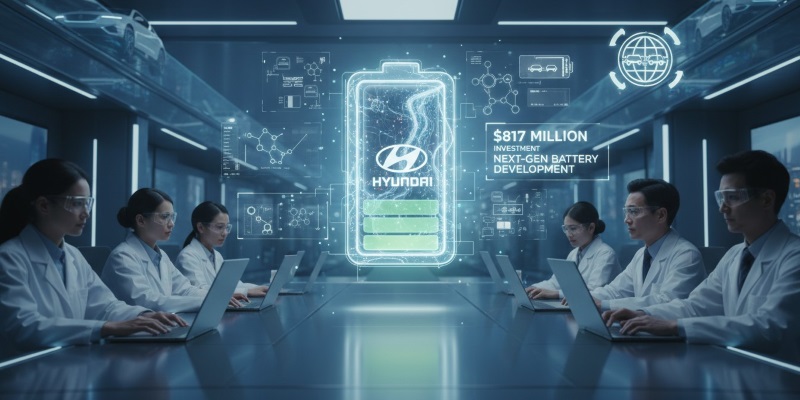
In a week packed with milestones across the automotive world, one headline rises above the rest: Hyundai is investing 1.2 trillion won ($817 million) to secure its place in the next era of electric mobility. The announcement – part of a broader shift toward battery vertical integration – signals how fiercely automakers are competing to control the technologies that will define transportation in the 2030s and beyond.
As part of The Downshift (TDS), today’s roundup goes deeper into what these developments mean for consumers, the EV market, and industry strategy. Although TDS is usually known for its short and snappy one-liners, this expanded report takes a full journalistic approach to unpack the long-term implications of the week’s most important moves.
Hyundai’s $817 Million Battery Campus Marks a Turning Point in EV Strategy
Hyundai Motor Group has confirmed a massive investment into its forthcoming Future Mobility Battery Campus in South Korea – a state-of-the-art facility focused on developing, validating, and stress-testing advanced battery packs before they enter mass production. Unlike traditional research labs built around theory and simulation, this new campus will operate as a real-world test ecosystem where batteries endure the same punishment they would face in everyday driving.
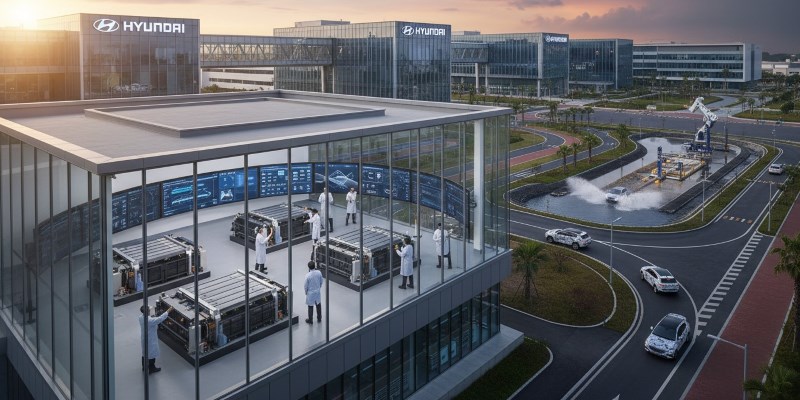
The automaker says it has already spent several years experimenting with new cell materials, chemistries, and formats, but the new facility finally gives Hyundai the scale needed to evolve beyond conventional lithium-ion approaches. The goal is clear: create safer, more powerful, longer-lasting batteries for EVs, plug-in hybrids, and extended-range electric models.
This move represents a broader industry trend toward vertical integration. By bringing cell design, pack engineering, and durability validation under one roof, Hyundai reduces its reliance on external suppliers and tightens control over both performance and cost structure. As global competition intensifies – especially from China’s rapidly expanding EV ecosystem – Hyundai is positioning itself to remain resilient.
For analysts watching EV development cycles, the investment is especially notable because it follows Hyundai’s recent acceleration of electric models like the Ioniq 5 N, Ioniq 6, and the upcoming Ioniq 9. The company has also hinted that next-generation battery tech will help power high-performance platforms and improve charging speeds, energy density, and cold-weather performance – three areas where consumers demand rapid improvement.
Toyota Teases New Performance Models Ahead of Thursday Reveal
Toyota also added fuel to the performance EV conversation this week. In a late-November teaser, the company released a dark silhouette image previewing three upcoming models:
- a new race car expected to compete in the GT3 category,
- its road-legal counterpart, now believed to carry the name Toyota GR GT,
- and, for the first time, what appears to be confirmation of a production version of the Lexus Sport Concept.
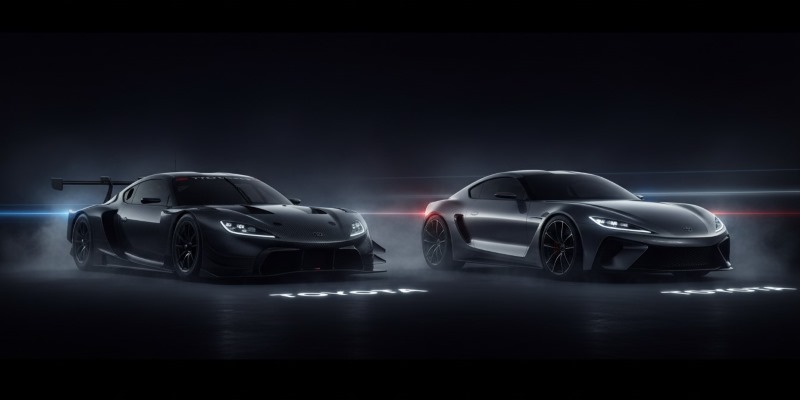
Toyota’s performance division has been building excitement for months, and the new reveal is scheduled for Thursday at 9 p.m. ET. The global shift toward electrified performance vehicles means Toyota will be working hard to balance brand heritage – especially models tuned by Gazoo Racing – with evolving regulatory pressure.
Expect a strong showing that blends track capability with road usability, possibly with hybrid or battery-electric drivetrains.
China Flooding Global Markets With Gas Cars No Longer Wanted at Home
A new report surfaced this week highlighting a trend that has been quietly building: China’s automakers are exporting a growing number of gas-powered vehicles as consumer demand in their domestic market shifts rapidly toward pure EVs. According to the report, Chinese manufacturers are sending these surplus combustion vehicles abroad at competitive prices, affecting markets across South America, Eastern Europe, Africa, and parts of Asia.
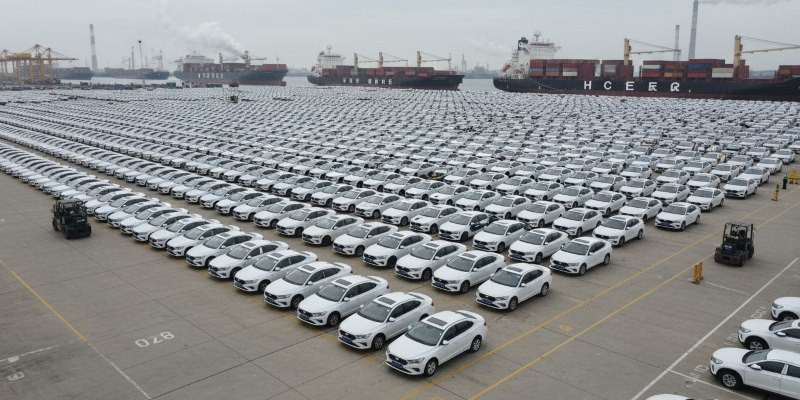
The move underscores how dramatically China’s electric transition has reshaped its internal market. As EV adoption accelerates, traditional ICE inventory faces diminishing appeal domestically – leaving export as the most viable route for automakers aiming to protect revenue.
For global competitors, the influx of low-cost gasoline cars threatens to reshape pricing dynamics, especially in emerging markets where EV infrastructure remains limited. It’s a reminder of how interconnected – and vulnerable – global auto supply chains have become.
Mercedes-Benz Drops New Teasers for the G-Class Cabriolet
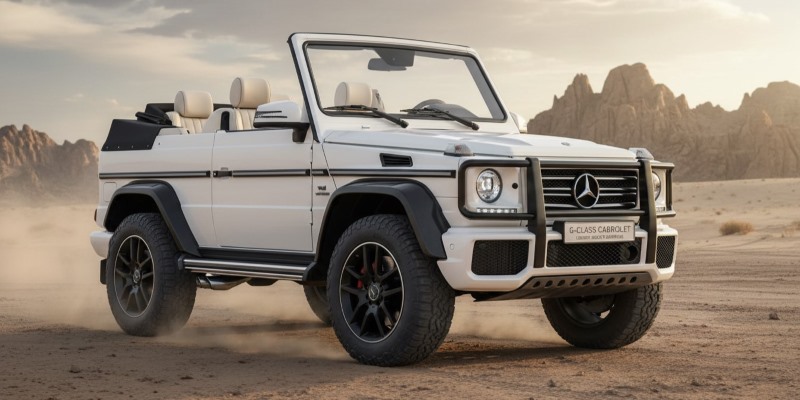
Mercedes-Benz generated buzz with two new images teasing the next G-Class Cabriolet, a rare variant combining the off-road heritage of the iconic G-Wagen with open-air luxury. The teasers show subtle body contours and a convertible roofline, hinting at familiar boxy proportions but potentially lighter construction and updated aerodynamics.
The G-Class Cabriolet has long been a niche favorite among collectors, and the return of an open-top version will likely draw strong interest from enthusiasts and luxury buyers. Mercedes continues leveraging nostalgia while modernizing the lineup with EV options like the Mercedes EQG, expected in the near future.
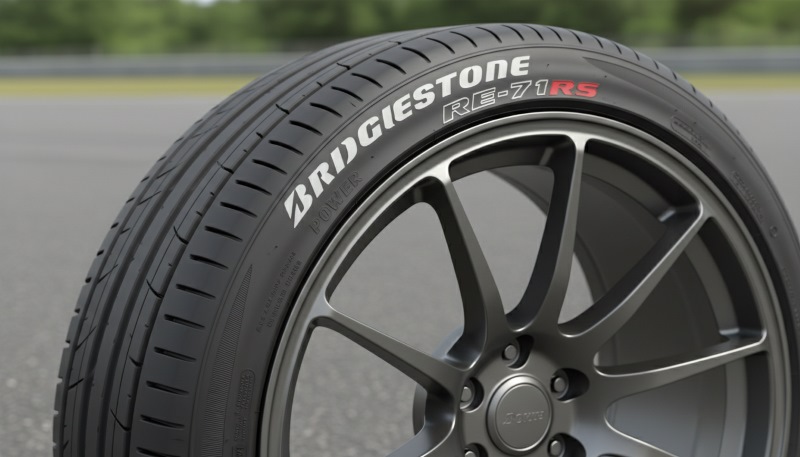
Bridgestone Prepares to Launch the Potenza RE-71RS Successor on New Year’s Eve
Performance drivers received welcome news as Bridgestone announced the next-generation successor to its Potenza RE-71RS – a beloved tire among autocross and track-day communities. Launching on New Year’s Eve, the upgraded model promises improved grip, faster heat cycles, and enhanced durability for both amateur and professional motorsports.
The Potenza line carries significant weight in the performance landscape, and the arrival of a successor underscores the tire industry’s growing focus on high-performance driving even as electrification reshapes vehicle dynamics.
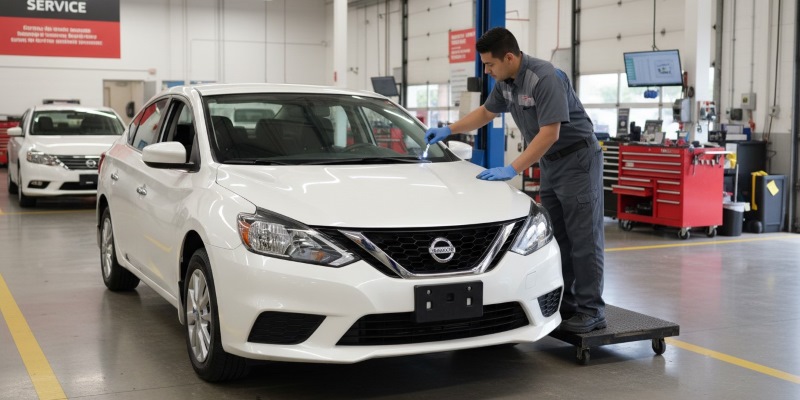
Nissan Recalls 42,000 Sentras Over Windshield Defect
Nissan issued a recall affecting nearly 42,000 Sentra models after discovering defective windshields that may contain visible air bubbles within the laminated glass. While the flaw does not pose an immediate safety risk, bubbles can impair visibility and reduce windshield structural integrity.
Owners will receive notice with instructions for free inspection and replacement at authorized service centers. The recall adds to a series of quality-control challenges Nissan has faced throughout the year, highlighting the industry-wide pressure to maintain durability as supply chains and production cycles continue to fluctuate.
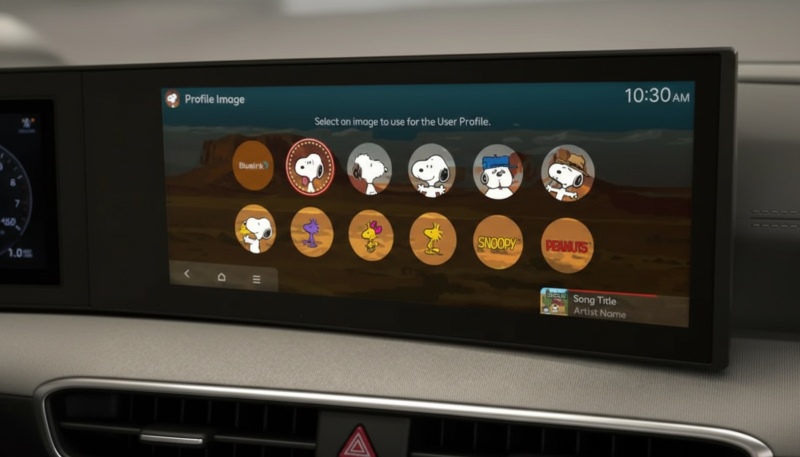
Hyundai Partners With PEANUTS for New In-Car Digital Experiences
Hyundai also made headlines for a more playful reason: a new collaboration with PEANUTS that brings beloved characters such as Snoopy, Charlie Brown, and Woodstock to the infotainment systems of select models including the Ioniq 9 and Palisade. The animated themes and screen visuals aim to elevate in-car personalization and appeal to families.
As automotive UX becomes a major differentiator – especially in EVs – automakers are experimenting with partnerships that blend entertainment, nostalgia, and digital brand identity.
Kia Previews the 2027 Seltos With a Fresh Design
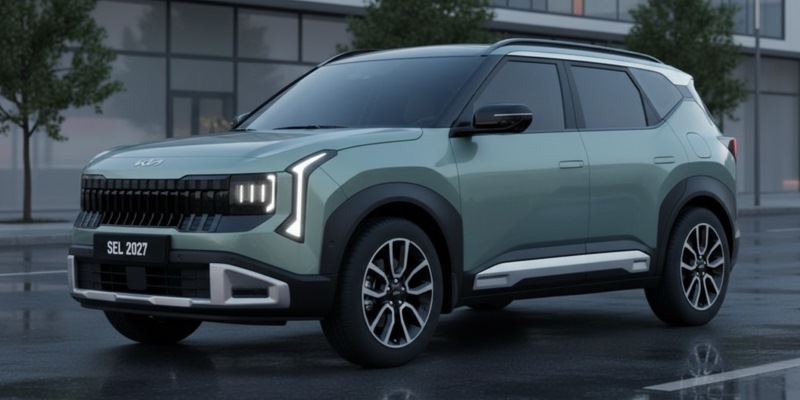
Kia offered a first look at the 2027 Kia Seltos, suggesting a design overhaul that sharpens the small SUV’s exterior lines and modernizes the cabin. The preview comes ahead of an expected full debut, with early impressions pointing toward improved aerodynamics, updated LED lighting, and expanded tech features.
The Seltos continues to be one of Kia’s strongest global sellers, and updating it for 2027 signals the brand’s commitment to keeping popular models competitive amid fierce compact SUV demand.
Electric Porsche Cayenne Proves More Capable Than Its Gas Counterpart
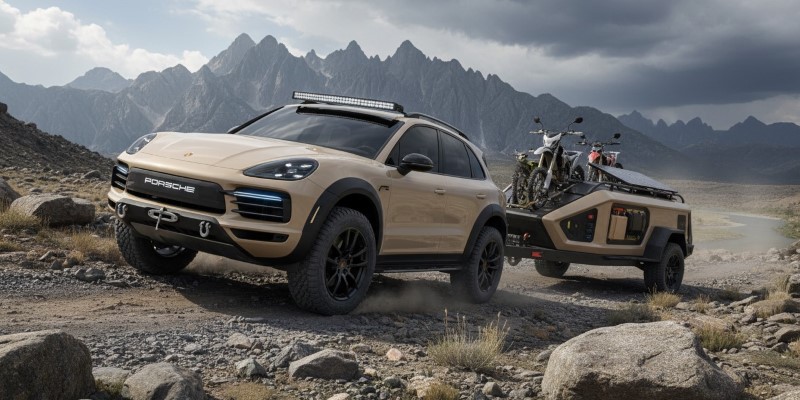
In an unexpected twist, the Porsche executive overseeing the Cayenne lineup said the upcoming electric Porsche Cayenne is more capable off-road than its gasoline-powered predecessor. He added that the EV version had recently towed a Porsche boat more than 150 miles on a single charge, underscoring Porsche’s focus on torque delivery and battery efficiency.
This aligns with a broader automotive theme: EVs often outperform expectations when it comes to towing and off-road control, thanks to instant torque, precise traction management, and low center of gravity.
Porsche Revives Classic Fabrics for Restoration Enthusiasts
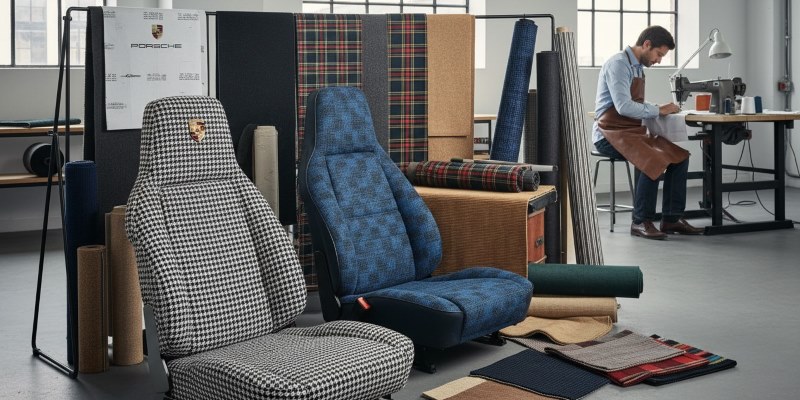
Porsche also announced the return of several iconic interior fabrics – Pasha, tartan, and Pepita – for customers restoring classic models. These retro materials are reproduced using modern manufacturing techniques, offering enthusiasts the chance to bring originality back to their vehicles while maintaining durability.
The move reflects rising demand within the heritage restoration market, where OEM-quality materials are highly valued.
Final Thoughts
This week’s headlines paint a clear picture of the auto industry’s trajectory: a rapid push toward electrification, vertical integration, and technology-driven differentiation. Hyundai’s $817 million battery investment is more than a corporate strategy – it’s a declaration of intent in a world where battery leadership equals market leadership. Meanwhile, brands like Toyota, Volkswagen, Mercedes, and Porsche are redefining performance, capability, and design in the EV era.
As global markets shift, supply chains evolve, and technology advances, the automakers who take bold steps today will likely shape the future of mobility for the next decade.
Leave a Reply