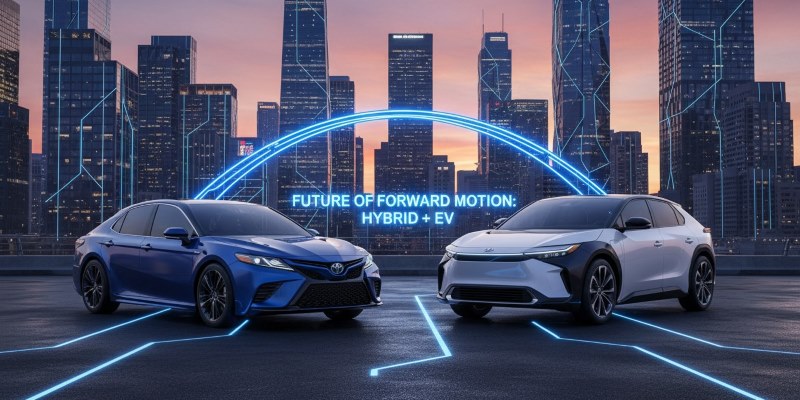
As the global auto industry races toward full electrification, Toyota finds itself at a strategic crossroads. While competitors like Tesla, Hyundai, and BYD are doubling down on all-electric vehicles, Toyota continues to champion its proven hybrid technology. The question for 2026 is clear: Will Toyota finally make the electric leap, or will it strengthen its hybrid dominance once more?
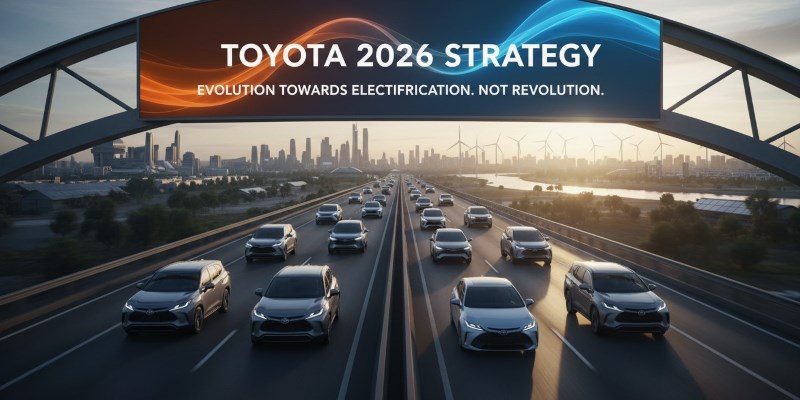
With over 25 years of hybrid leadership, Toyota enters 2026 balancing innovation and caution. The company has confirmed multiple new EV models under its “bZ” lineup while upgrading its core hybrid vehicles like the Camry, RAV4, and Prius. This dual strategy combining reliability with electrification—defines Toyota’s next chapter, where evolution, not revolution, may prove the smarter move.
Toyota’s 2026 Lineup Overview
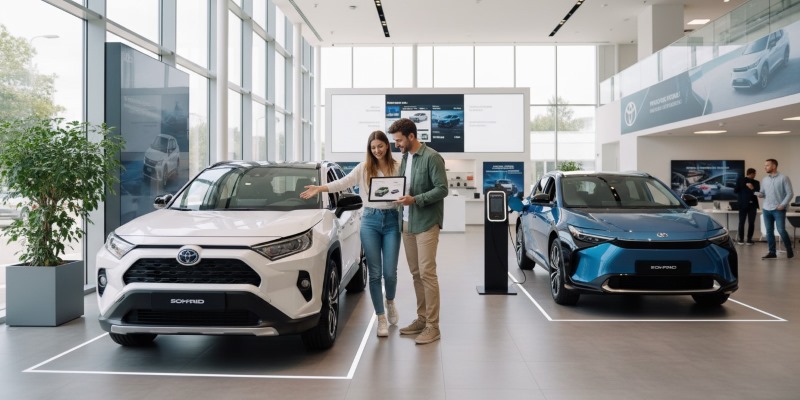
Toyota’s 2026 lineup demonstrates its trademark versatility: a broad mix of hybrids, plug-in hybrids, and pure EVs designed for every segment. The company isn’t betting everything on electric just yet but it’s clearly preparing for that future.
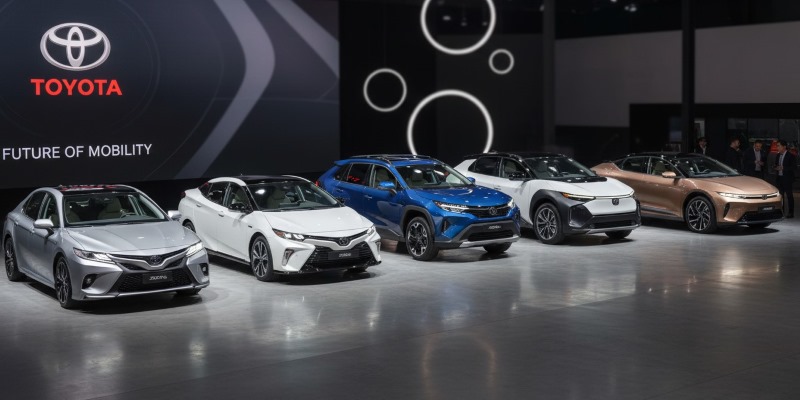
- Hybrid Core Models: The all-new Camry Hybrid 2026, Prius 2026, and RAV4 Prime remain Toyota’s global best-sellers, now featuring improved lithium-ion batteries, better fuel economy, and refined driving dynamics.
- Electric Expansion: The updated bZ4X electric crossover and upcoming bZ5X three-row SUV mark Toyota’s next step in electrification. Both run on Toyota’s e-TNGA platform, designed for efficiency and modular scalability.
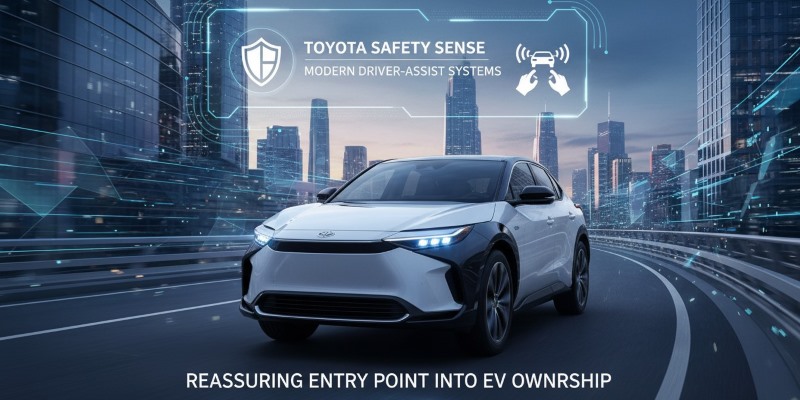
- Performance & Practicality: Expect performance upgrades and more connected in-car software through Toyota’s next-gen Car OS bridging the gap between traditional drivability and smart tech.
In essence, Toyota’s 2026 lineup reinforces a simple truth: the brand believes different markets need different solutions. Hybrids for accessibility. EVs for innovation. Together, they form a realistic pathway toward carbon neutrality.
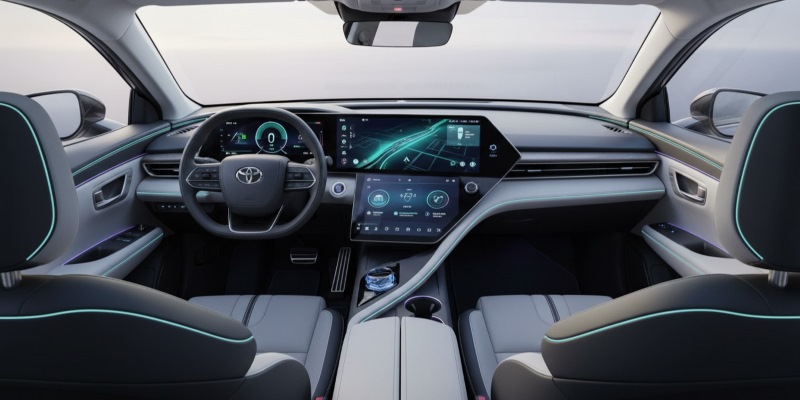
Hybrid Stronghold: Why Toyota Still Believes in Hybrid
While much of the auto industry has shifted focus toward fully electric vehicles, Toyota remains steadfast in its “Hybrid First” philosophy a belief that hybrid technology remains the most practical and scalable solution for the global transition toward electrification. Rather than racing headfirst into an all-EV future, Toyota’s strategy emphasizes accessibility, durability, and real-world efficiency.
At the heart of this approach lies a simple truth: the global automotive landscape isn’t moving at one uniform pace. Many markets from North America’s rural regions to developing economies still lack sufficient charging infrastructure or affordable electricity costs. For these drivers, Toyota’s mature hybrid system offers an ideal balance between eco-conscious driving and convenience.
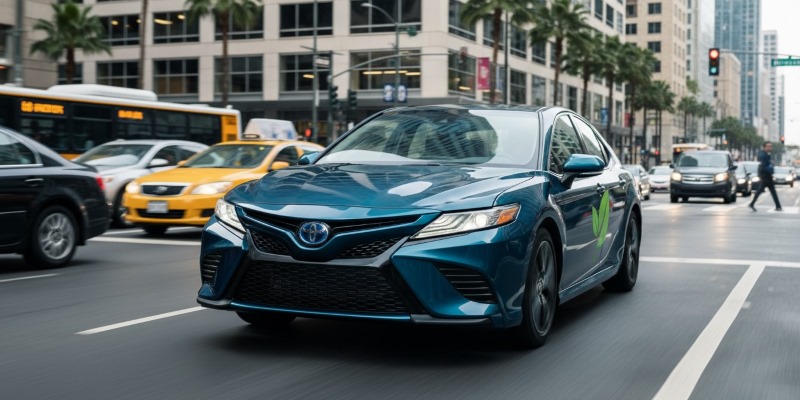
Proven Strengths of the Hybrid Approach
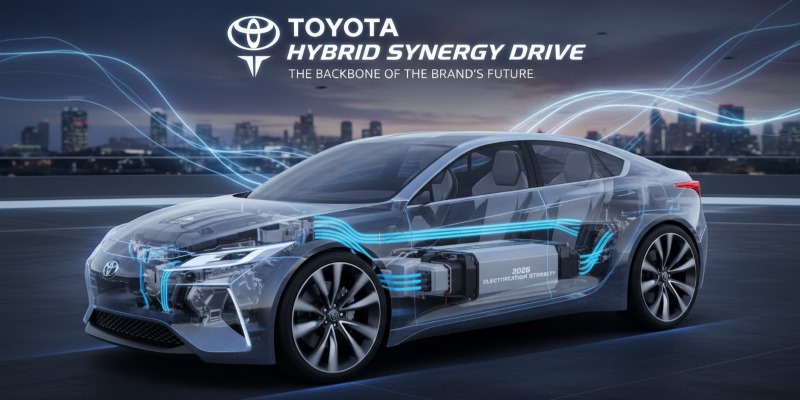
Toyota’s competitive advantage in hybrids stems from decades of refinement and massive scale. Its Hybrid Synergy Drive technology has evolved over 25 years, achieving unmatched efficiency and dependability. Owners benefit from:
- Low Total Cost of Ownership: Hybrids require no external charging and typically have lower maintenance costs than plug-in or full EVs.
- Exceptional Durability: Toyota’s hybrid components, including its electric motors and e-CVT transmissions, are known for longevity exceeding 300,000 miles.
- Urban Efficiency: In stop-and-go city traffic, hybrids like the Camry Hybrid 2026 deliver impressive real-world mileage while reducing emissions where they matter most.
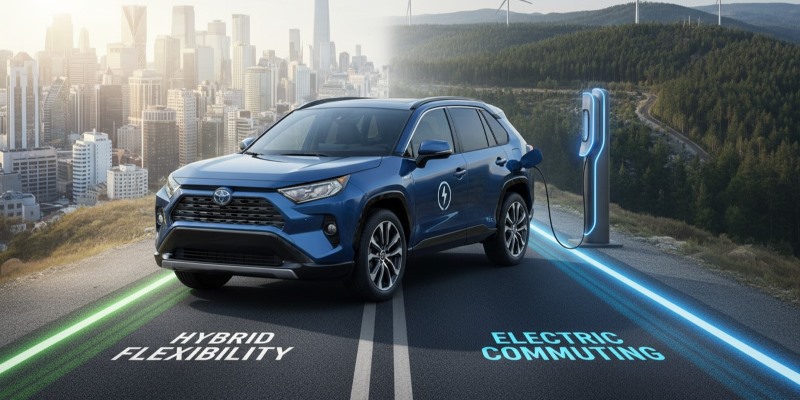
Showcasing the 2026 Hybrid Lineup
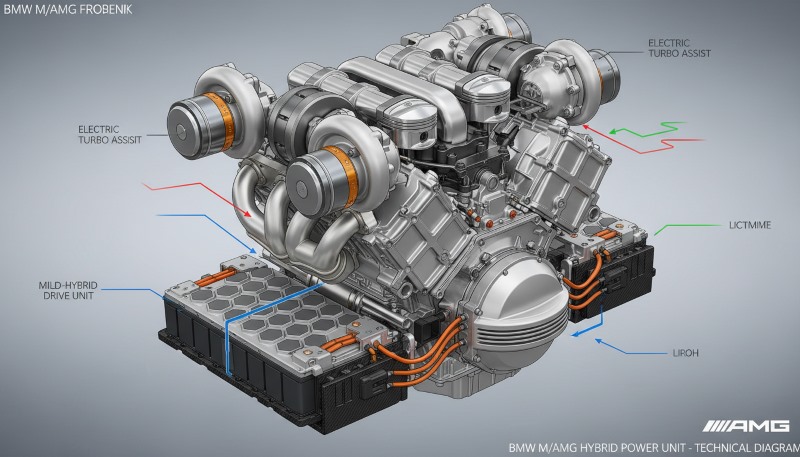
- Camry Hybrid 2026: Featuring upgraded lithium-ion batteries and an optimized Atkinson-cycle engine, it blends sharper handling with smoother energy transitions. Toyota also improved regenerative braking to enhance efficiency in everyday driving.
- RAV4 Prime 2026 (PHEV): Acting as the bridge between hybrid and electric, this plug-in SUV offers up to 600 miles of combined range and over 40 miles of pure EV travel ideal for families who want flexibility without range anxiety.
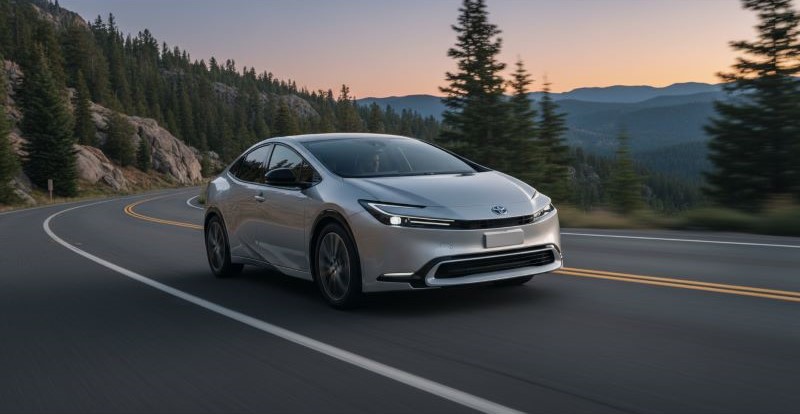
- Prius 2026: Once the poster child for fuel economy, the new generation adds aerodynamic refinement and a stronger electric motor, turning eco-friendly driving into a genuinely engaging experience.
Toyota’s confidence in hybrids isn’t resistance to change it’s a recognition of reality. By perfecting hybrid technology first, Toyota ensures a smoother, more sustainable transition toward an all-electric future, built on decades of proven reliability and consumer trust.
Toyota’s EV Ambition: bZ Series and Future Battery Tech
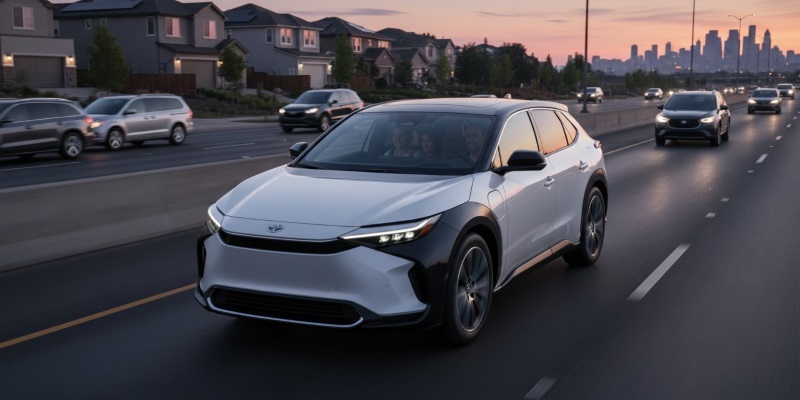
After years of prioritizing hybrids, Toyota is now accelerating into the full-electric era with a carefully calculated strategy one rooted in engineering depth rather than marketing speed. The brand’s bZ (Beyond Zero) lineup represents Toyota’s first true global push into the EV mainstream, blending the company’s reliability DNA with new-generation electrification.
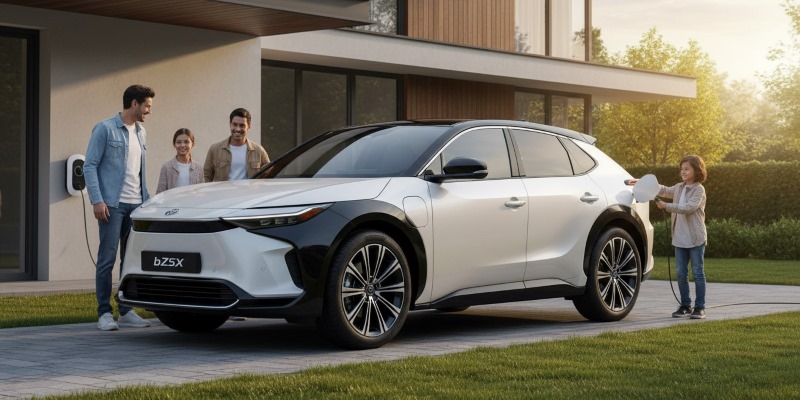
The bZ Lineup: Foundation for Toyota’s Electric Future
The bZ4X, Toyota’s first mass-market EV, laid the groundwork for the upcoming bZ5X (a three-row SUV) and bZ3, a sedan developed in collaboration with BYD for the Asian market. Each model reflects Toyota’s focus on practicality and consistency rather than chasing extreme specs.
By 2026, Toyota plans to launch at least six new EV models, expanding across SUVs, sedans, and compact crossovers. These vehicles will ride on a dedicated EV platform optimized for weight balance, aerodynamics, and safety signaling that Toyota is no longer testing the waters, but preparing for large-scale electrification.
Battery Innovation: The Solid-State Breakthrough
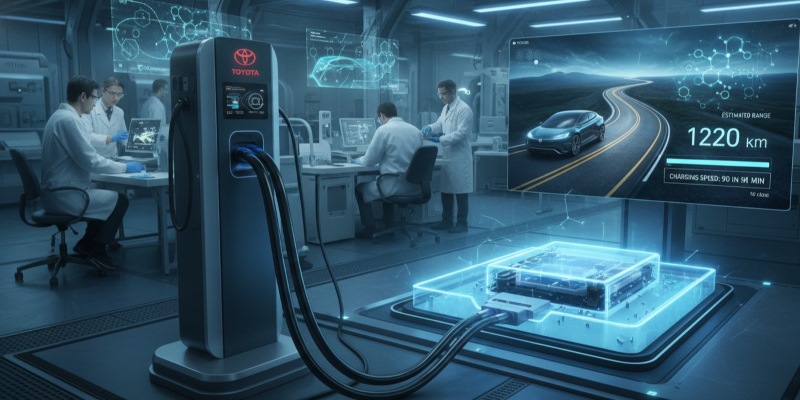
Where Toyota aims to outpace rivals isn’t just in vehicles, but in battery technology. The company has invested heavily in solid-state batteries, a next-generation chemistry that replaces liquid electrolytes with solid materials for improved energy density and safety.
Early testing shows potential for ranges exceeding 600 km (≈ 373 miles) and charging times under 15 minutes, which could redefine convenience for EV owners. Toyota expects commercial deployment around 2027, initially targeting premium models before expanding the technology to mass-market vehicles.
Balancing Innovation with Realism
Despite its ambitious goals, Toyota maintains its signature pragmatic approach. Executives acknowledge that high battery costs, raw material limitations, and uneven global charging infrastructure remain critical challenges. That’s why Toyota continues to invest in both hybrid and EV development, ensuring it can pivot based on market readiness.
In short, Toyota’s EV journey is not a sprint, it’s a marathon built on methodical engineering. The bZ series marks the beginning of a new chapter, but the company’s true strength lies in its discipline: advancing technology only when it’s reliable, scalable, and ready for real-world drivers.
Comparison Table: Hybrid vs. EV 2026 Lineup
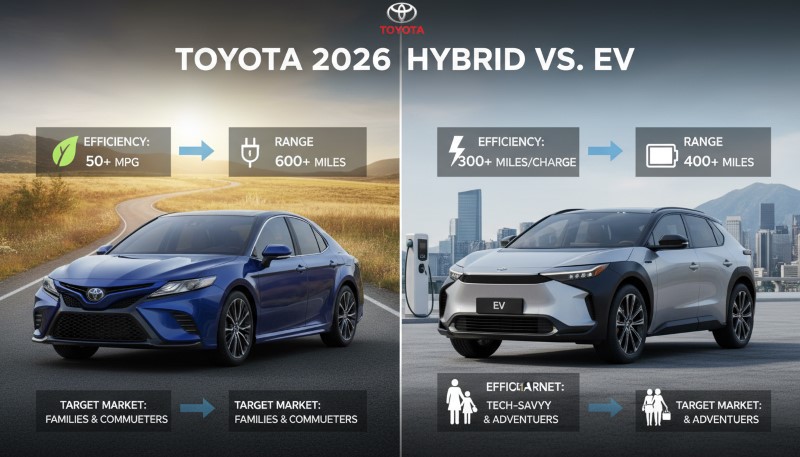
Toyota’s 2026 portfolio clearly shows its dual-track strategy maintaining leadership in hybrid efficiency while steadily expanding into full-electric mobility. This balanced approach allows the brand to appeal to both traditional buyers and the new wave of EV adopters.
The table below highlights how Toyota positions each model across technology, performance, and target audience:
| Model | Powertrain | Estimated Range | Charging / Fuel Efficiency | Target Market |
| Toyota Camry Hybrid 2026 | Hybrid | ~650 miles | 52 MPG combined | Family sedan buyers seeking comfort and economy |
| Toyota RAV4 Prime 2026 | Plug-in Hybrid (PHEV) | ~600 miles (EV + gas) | 94 MPGe | Urban SUV users wanting flexibility and range |
| Toyota bZ4X 2026 | All-Electric | ~300 miles | 150 kW DC Fast Charging | Early EV adopters focused on tech and sustainability |
| Toyota bZ5X 2026 | Electric SUV (3-row) | ~320 miles | TBD (Expected 200 kW+) | Family EV buyers needing space and performance |
| Toyota Prius 2026 | Hybrid | ~640 miles | 56 MPG | Eco-minded drivers prioritizing efficiency |
Analysis
This lineup underscores Toyota’s transition phase: hybrids like the Camry and Prius remain the backbone for volume and affordability, while the bZ4X and upcoming bZ5X signal the brand’s EV maturity. The RAV4 Prime bridges both worlds offering electric commuting with gas-powered flexibility for longer trips.
For consumers, this mix means choice: hybrids for proven practicality, and EVs for cutting-edge sustainability. For Toyota, it’s a strategic hedge ensuring dominance regardless of how fast the world shifts to full electrification.
Market & Consumer Insight
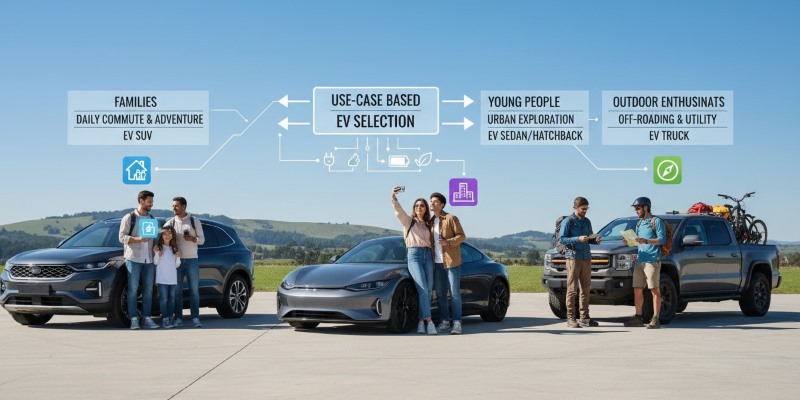
Toyota’s 2026 market strategy reflects a clear understanding of shifting consumer behavior in the automotive world. Rather than betting solely on full electrification, the company has crafted a multi-tier approach that caters to three distinct buyer segments each with its own motivations and priorities.
1. Hybrid Loyalists:
This core customer base continues to trust Toyota’s hybrid technology for its proven reliability, low maintenance cost, and superior fuel economy. For many Camry and Prius owners, the hybrid system isn’t just an eco-friendly choice, it’s a long-term value investment that outlasts trends.
2. EV Early Adopters:
A smaller but fast-growing group of tech-oriented consumers is drawn to Toyota’s bZ Series, including the bZ4X and upcoming bZ5X. These buyers prioritize innovation, connectivity, and sustainability, viewing EV ownership as a statement of progress and environmental responsibility.
3. Mainstream Buyers:
This segment represents the practical middle ground consumers who appreciate hybrid efficiency but remain cautious about EV infrastructure. The RAV4 Prime and Camry Hybrid perfectly fit this group, balancing performance, cost, and convenience.
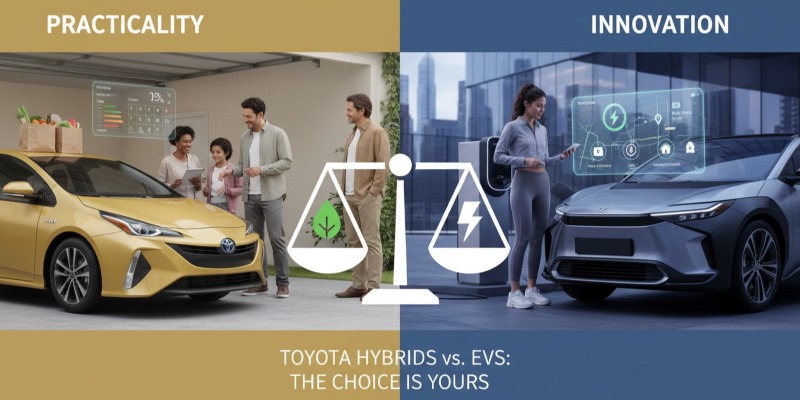
Market studies indicate that in the U.S. through 2028, a majority of consumers still view hybrid vehicles as the most realistic bridge toward full electrification, given the slow expansion of charging networks and concerns over EV affordability. Toyota’s ability to serve all three audiences ensures that it remains relevant, profitable, and adaptable in a rapidly evolving market.
Challenges & Transition Risks
Despite its strong hybrid legacy, Toyota faces mounting challenges as the global auto industry accelerates toward full electrification. Pure EV players such as Tesla, Hyundai, and BYD are rapidly expanding their electric lineups, offering competitive range, faster charging, and increasingly affordable prices. This puts pressure on Toyota to prove that its hybrid-first strategy can remain relevant in a market that rewards full EV innovation.
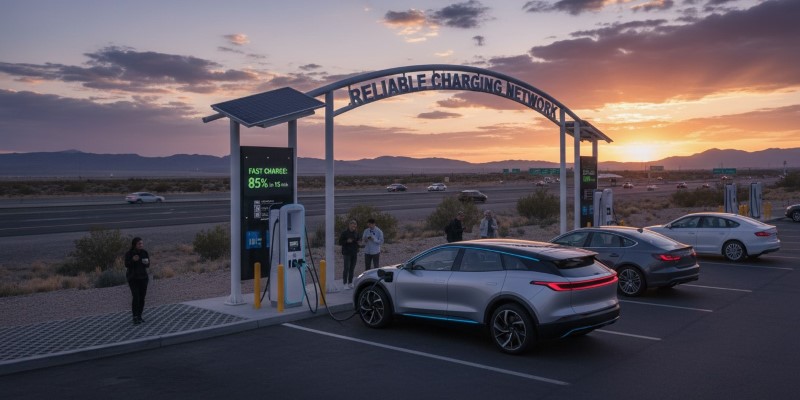
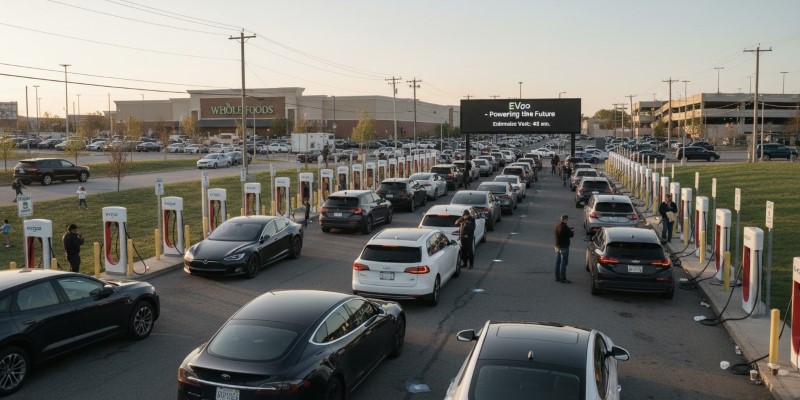
One of Toyota’s biggest hurdles lies in charging infrastructure. While hybrids and plug-in hybrids thrive in today’s conditions, EV adoption still depends on the widespread availability of fast-charging stations and consistent performance across regions. The company’s bZ series success will hinge on improving both charging convenience and battery reliability.
Compounding these challenges are stricter EPA emission regulations set for 2026, which demand significant CO₂ reductions across all vehicle classes. Toyota must optimize hybrid efficiency while pushing forward its solid-state battery development the technology expected to bridge the gap between hybrid practicality and EV purity.
In essence, Toyota’s path forward is a long-term game: refining its hybrid dominance while preparing for an all-electric future. The transition may be gradual, but Toyota’s measured strategy could ultimately secure its place in the next phase of sustainable mobility.
Expert Opinions & Industry Analysis
Industry experts widely recognize Toyota’s hybrid-first strategy as both pragmatic and forward-thinking. According to MotorTrend, “Toyota’s approach is pragmatic not slow. They’re building the bridge to EVs, not jumping off it.” This reflects the brand’s philosophy of maintaining reliability and affordability while gradually introducing electric models.
Analysts at Automotive News highlight the efficiency and maturity of Toyota’s hybrid systems as a key competitive advantage. The Camry Hybrid 2026, RAV4 Prime, and Prius demonstrate that Toyota has mastered fuel economy and long-term durability, which resonates strongly with American buyers who prioritize low ownership costs and proven technology.
However, experts also caution that the EV transition is accelerating in the U.S., with Tesla, Hyundai, and emerging Chinese brands gaining ground quickly. While Toyota’s bZ series shows potential, analysts note that infrastructure gaps, charging speed, and early adopter appeal are areas that require urgent focus. “Hybrid dominance is sustainable for now,” says one analyst, “but to retain U.S. market share, Toyota must scale its EV offerings and solid-state battery initiatives more aggressively.”
Overall, the consensus is that Toyota’s strategy is balanced and well-informed, combining immediate practicality with long-term innovation. The hybrid lineup ensures market stability, while investments in EVs and next-generation battery technology position Toyota for the eventual full electrification wave. For consumers and industry observers alike, Toyota exemplifies a calculated transition that prioritizes both performance and environmental responsibility.
Conclusion: Evolution, Not Revolution
Toyota’s strategy in 2026 is all about evolution rather than revolution. Hybrids remain the backbone of the lineup, offering proven reliability, fuel efficiency, and low ownership costs, while EVs under the bZ series are gradually expanding to meet early adopter demand.
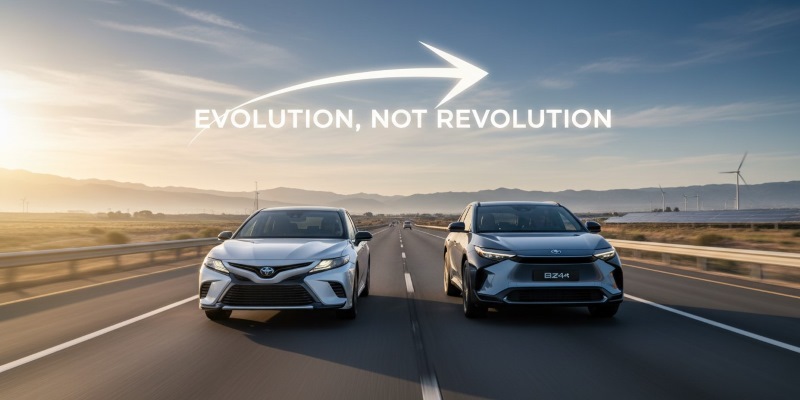
This transitional approach positions Toyota to balance market expectations with technological innovation. The winner in this new era won’t necessarily be the brand that electrifies the fastest, but the one that times its moves to align with consumer needs and infrastructure readiness.
For enthusiasts and industry watchers, 2026 is a pivotal year: hybrids hold steady, EVs gain traction, and Toyota demonstrates that strategic patience can be just as powerful as speed in the race toward full electrification.
Follow TwoSpotlight.com for full coverage on the 2026 hybrid & EV revolution.
FAQ: Toyota Hybrid & EV 2026 (EEAT Optimized)
As Toyota expands both its hybrid legacy and fully electric bZ lineup, many U.S. buyers are weighing practicality against innovation. The 2026 model year reflects Toyota’s dual-path strategy: strengthen proven hybrid technology while accelerating EV adoption. Below are the most frequently asked questions to help drivers understand Toyota’s direction, benefits, and buying considerations for 2026.
Q1: Will Toyota fully go electric by 2026?
A: No. Toyota will maintain a strong hybrid lineup while gradually expanding EV offerings under the bZ series. The strategy prioritizes reliability, cost-effectiveness, and user familiarity, ensuring loyal hybrid customers aren’t left behind.
Q2: Which Toyota EVs are expected in 2026?
A: Key models include the bZ4X refresh and the 3-row bZ5X SUV. Both vehicles target early EV adopters, offering ranges of 300–320 miles and fast-charging up to 150 kW DC, while remaining compatible with Toyota’s growing service network.
Q3: Are Toyota hybrids still worth buying in 2026?
A: Absolutely. Camry Hybrid 2026, RAV4 Prime, and Prius provide 52–56 MPG combined, excellent durability, and lower ownership costs than EVs in many U.S. regions. They remain practical, especially for urban and family driving.
Q4: How does Toyota’s hybrid technology compare to competitors?
A: Toyota’s Hybrid Synergy Drive is mature and widely proven, offering smooth acceleration, fuel savings, and minimal maintenance. Competitors are catching up, but few match Toyota’s network of trained technicians and long-term reliability record.
Q5: What are the main benefits of Toyota’s EV bZ series?
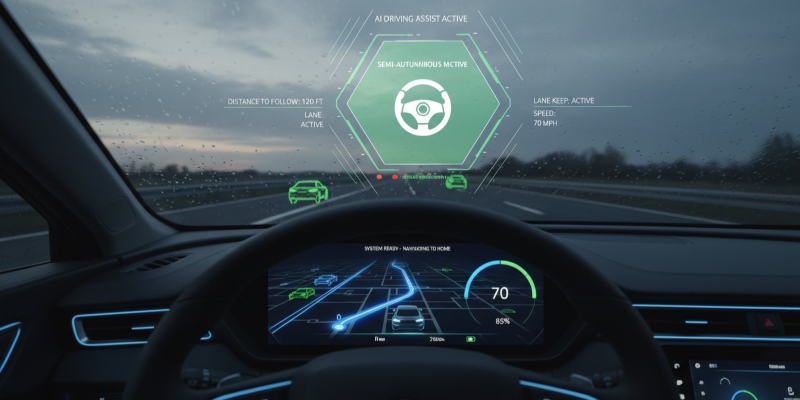
A: The bZ series delivers zero tailpipe emissions, modern Car OS features, and OTA updates. Early models like bZ4X and bZ5X offer intuitive infotainment, semi-autonomous assist, and eco-friendly urban performance, appealing to tech-savvy drivers.
Q6: Are Toyota hybrids compatible with plug-in or EV charging options?
A: Yes. Models like RAV4 Prime are plug-in hybrids (PHEVs), allowing short-range all-electric driving and traditional hybrid efficiency for longer trips. This flexibility eases the transition to full EVs.
Q7: Will Toyota hybrids and EVs benefit from U.S. incentives in 2026?
A: Likely. Federal and state tax credits continue to favor both hybrids (in limited cases) and EVs, making Toyota’s lineup financially appealing for mainstream buyers while aligning with EPA and sustainability goals.
Q8: How should consumers choose between a Toyota hybrid and EV in 2026?
A: If daily fuel efficiency, reliability, and cost are priorities, hybrids like Camry or Prius remain ideal. If early adoption of EV tech, zero emissions, and modern infotainment matter most, the bZ series is a strategic choice. Many buyers may combine both, starting with a hybrid and upgrading to EV as infrastructure improves.