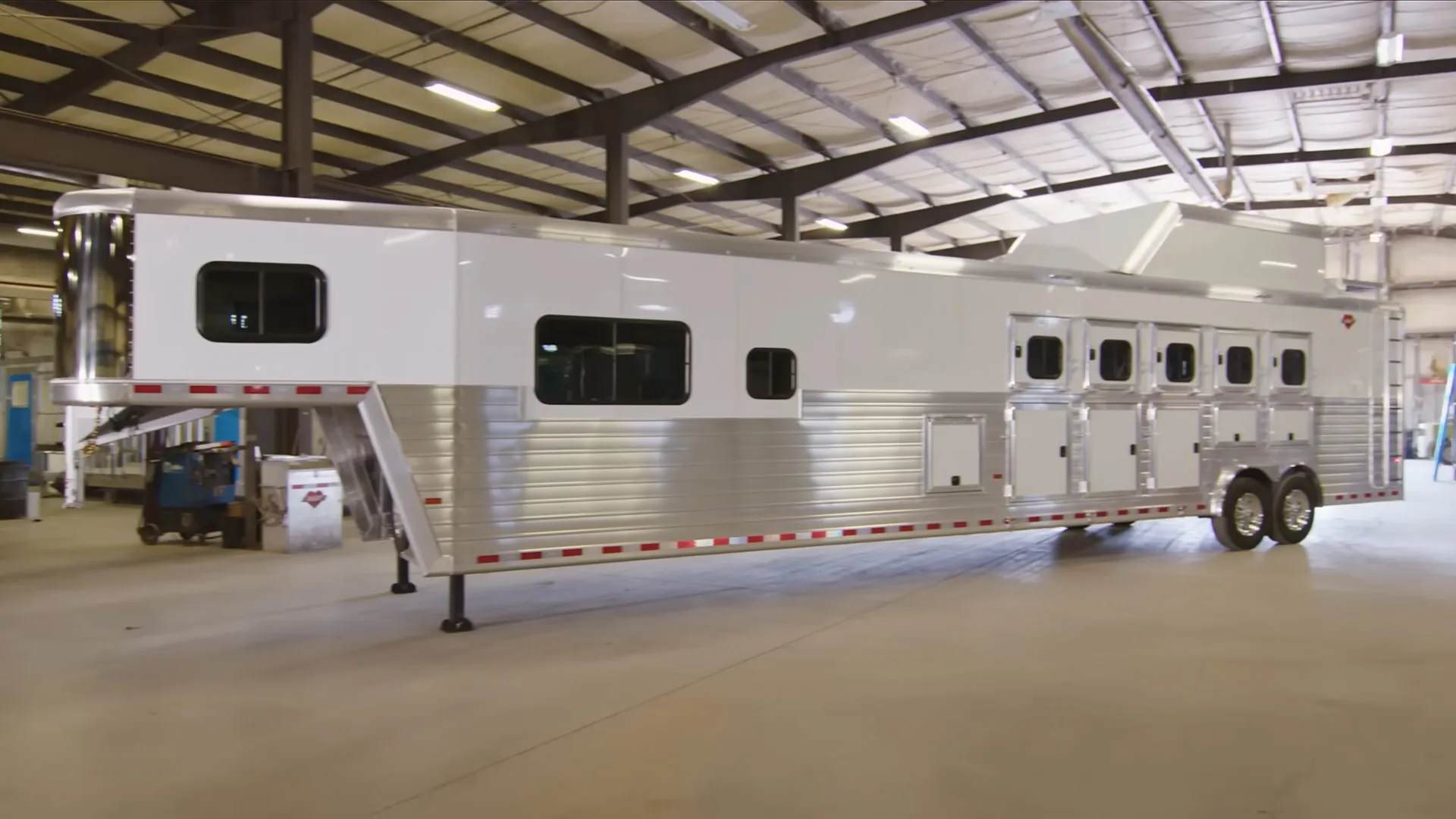
For anyone involved in towing, the assumption has long been that more trailer axles automatically means better performance. After all, specialized haulers carrying enormous loads often come with more axles than a rodeo parking lot. But towing experts are challenging this conventional wisdom, suggesting that in many cases, a well-built tandem-axle trailer can outperform its triple-axle counterpart.
Tandem vs. Triple: The Towing Debate
Randy Stamper, founder of Hart Trailer, has spent decades working on trailer design and heavy-duty towing solutions. According to Stamper, the triple-axle trailer myth—the belief that more axles always mean better stability or capacity is just that: a myth.
“We don’t want to dismiss what people want,” Stamper explains, “but we feel a responsibility to design trailers that are safest and most efficient for the load and the driver.”
Hart Trailer, a company known for robust heavy-duty tandem trailers, has taken this philosophy to heart: they refuse to build triple-axle trailers, despite frequent requests from customers. Instead, Stamper uses educational content, including detailed YouTube walkthroughs, to illustrate why two axles are often superior to three.
Understanding Axle Ratings and Component Strength
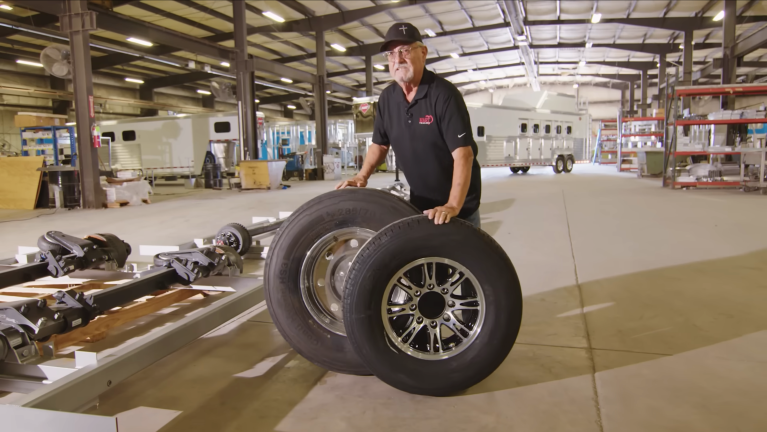
One key factor is axle and wheel sizing. Hart Trailer’s tandem designs use 7,000- and 8,000-pound axles with 16-inch wheels, as well as 10,000- and 12,000-pound axles with 17.5- and 19.5-inch wheels, respectively. The differences in axle strength, tire capacity, hubs, and brakes are significant.
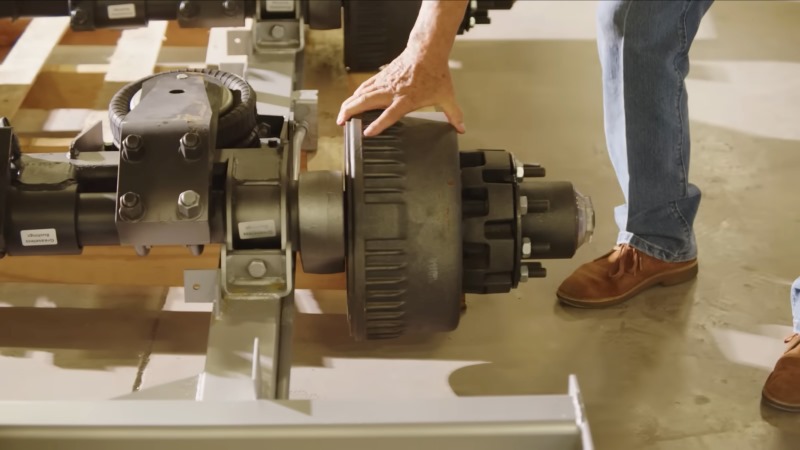
Even though it is technically possible to mount larger tires on smaller axles, the braking capacity is inherently limited. For example, a 12,000-pound axle with 19.5-inch wheels supports much larger tires, bigger brakes, and stronger hubs compared to a 7,000-pound axle with 16-inch wheels, allowing for safer towing under heavy loads.
“Bigger axles aren’t just about load capacity,” Stamper notes. “They provide better braking, better hub durability, and a longer lifespan for the tires themselves.”
This means that two properly rated axles can outperform three smaller axles, even if the gross vehicle weight rating (GVWR) is technically similar.
The Pivot Problem: How Triple Axles Can Cause Wear
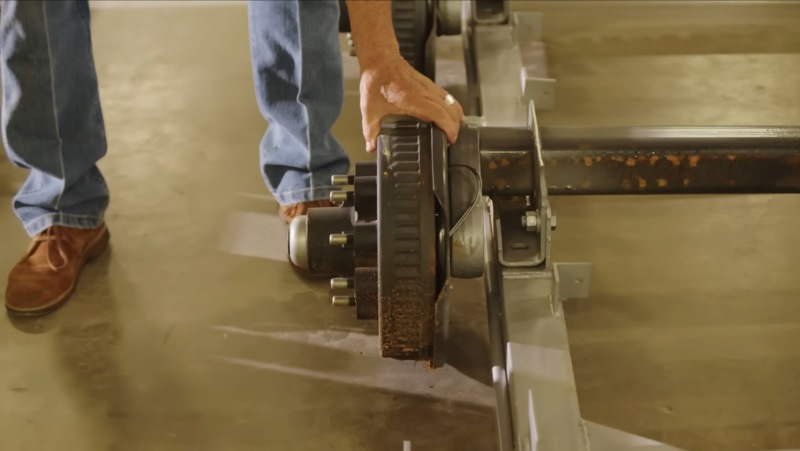
Beyond axle ratings, there’s a more subtle issue with triple-axle trailers: pivot points. A triple-axle trailer pivots around the middle axle, which causes the other two axles to drag during turns. Over time, this leads to excessive tire wear, spindle stress, and uneven load distribution.
Tandem-axle trailers, by contrast, avoid this problem. Both axles share the load evenly and pivot more naturally with the trailer frame. As Stamper emphasizes:
“Two axles are better than three axles any way you configure it.”
This principle has practical implications for frequent haulers, commercial towing operators, and recreational users alike, reducing long-term maintenance costs while improving safety and stability.
Why Tandem Axles Often Make More Sense
There are several practical and long-term advantages to choosing tandem-axle trailers over triple-axle setups, particularly when considering everyday usability, maintenance costs, towing efficiency, and overall performance in real-world driving conditions:
- Better Tire Longevity: Fewer axles mean less uneven wear during tight turns, reducing the frequency of tire replacement.
- Simplified Maintenance: With fewer components, braking, hubs, and spindles require less ongoing maintenance.
- Lower Weight: Fewer axles reduce overall trailer weight, improving fuel efficiency and making the trailer easier to tow with standard pickup trucks.
- Cost Efficiency: Fewer axles translate to lower manufacturing costs and lower replacement part costs.
- Improved Handling: Tandem axles offer more predictable handling, especially for lighter trailers where triple axles can introduce unnecessary drag and instability.
Even though triple-axle trailers may appear more capable at first glance, these advantages make tandem axles a smarter choice for most towing scenarios.
Real World Implications for Hauling and Towing
Consider a trailer rated for a 12,000-pound GVWR. Using two 12,000-pound axles provides not only adequate load support but also superior braking, better tire choices, and longer hub life. In contrast, three 8,000-pound axles may match the weight rating but fall short in braking performance and wear resistance.
For anyone towing boats, RVs, livestock, or heavy equipment, these differences can have major safety and financial consequences. Tandem-axle trailers are also easier to maneuver in tight spaces, an often-overlooked advantage for rural properties, marinas, and construction sites.
What This Means for Trailer Buyers
If you’re considering purchasing a trailer, it’s worth evaluating axle quality over quantity. Stamper’s guidance is clear: load capacity, brake strength, and pivot design are more important than simply counting axles.
Before investing in a triple-axle trailer, consider:
- Are the individual axles rated high enough for your load?
- Will the triple-axle setup increase tire and spindle wear unnecessarily?
- Are you towing in tight spaces where triple axles could reduce maneuverability?
- How will maintenance and replacement costs differ between tandem and triple setups?
Many first-time trailer buyers assume that “more is better,” but understanding these engineering and safety considerations can save money and improve towing performance.
Conclusion: Smarter Towing Starts with Smart Axles
The argument for triple-axle trailers often relies on assumptions rather than practical experience. While more axles can theoretically distribute weight better, they introduce issues with pivoting, braking, and long-term wear. In contrast, a well-designed tandem-axle trailer with properly rated components provides better handling, improved braking, longer tire life, and lower maintenance costs.
As Randy Stamper and Hart Trailer demonstrate, “two is often better than three” when it comes to trailer axles. For heavy-duty towing, RV hauling, and commercial transport, this principle can lead to safer, more efficient, and more cost-effective towing.
Next time you consider adding an extra axle, remember: quality and engineering matter more than quantity. A strong, well-built tandem trailer could outperform a triple-axle setup in almost every practical scenario.
Leave a Reply